
Holding the Target Despite Setbacks
May 25, 2026
AST SpaceMobile has reaffirmed its plans to launch 45 BlueBird satellites by the end of 2026. At a meeting with investors in mid-May, CEO Abel Avellan stated that the company is readying itself for its next launch with SpaceX in mid-June, when three BlueBird satellites, namely BlueBirds 8, 9 and 10, will be launched on a Falcon 9 rocket. The message from leadership was that the deployment programme was on track, the team was focused and the annual target was unchanged despite the turbulence of recent weeks. Avellan was clear in his public messages, stressing that the company had enough manufacturing depth and flexibility for launching to be able to take a hit and not miss its schedule.
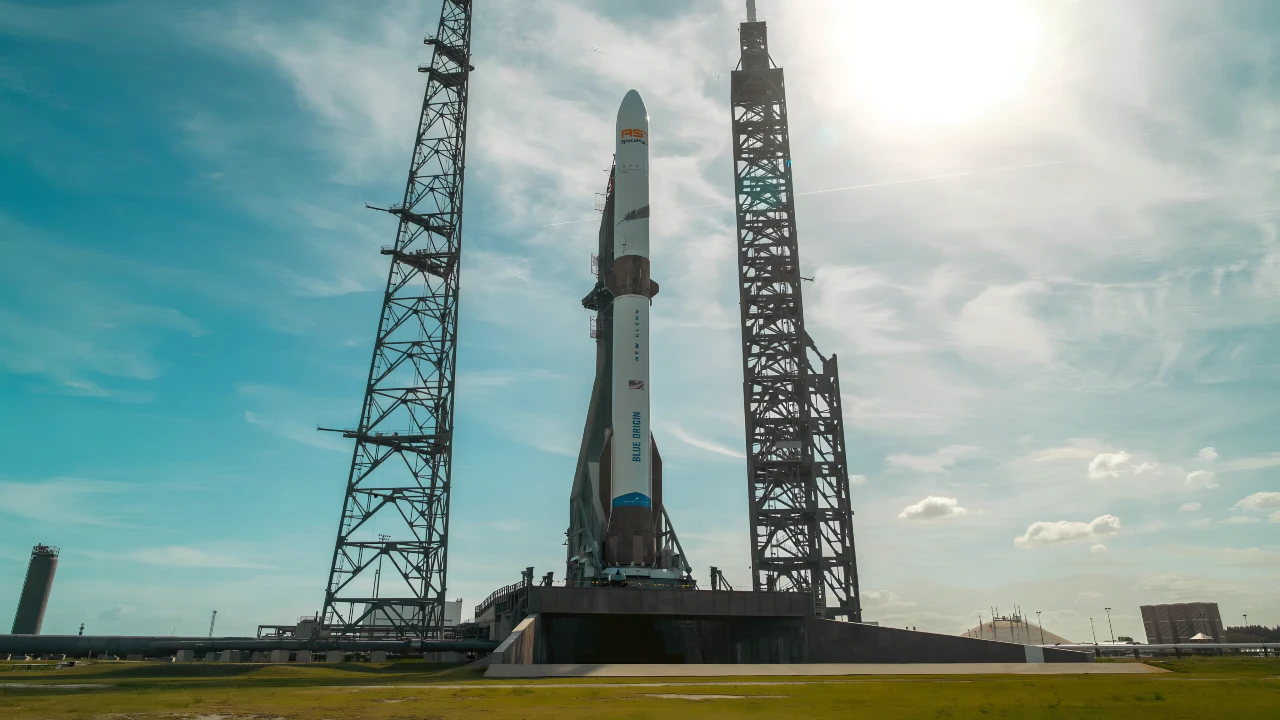 The New Glenn rocket on the launch pad ahead of its April mission. Credit: Blue Origin
Despite a painful setback in April when a Blue Origin New Glenn vehicle launched the BlueBird 7 satellite into a much lower orbit than intended, confidence remains high. The spacecraft separated from the launch vehicle and powered on, but the altitude was not high enough to allow the spacecraft to operate with its on-board thruster technology and de-orbiting was the only choice. The write-off of the satellite is expected to cost between 155 million and 160 million dollars, which will be recorded in the second quarter of 2026, AST SpaceMobile said in its 10-Q filing with the Securities and Exchange Commission. The company also said it had launch insurance which covers part of the costs and has already made the necessary claims with its insurers.
The Blue Origin Failure and Its Consequences
This was the third flight of the New Glenn rocket and its first for a commercial customer. The vehicle had shown definite potential in its first two flights. The rocket made its maiden flight in January 2025 and in November of that year successfully launched a NASA mission that sent the ESCAPADE twin spacecraft toward Mars. During that November flight, Blue Origin also recovered the first-stage booster on an ocean barge, becoming only the second company after SpaceX to recover an orbital booster during an operational mission. The April failure was a major blow to a vehicle that had been gaining momentum and credibility in both the government and commercial sectors, and it drew immediate attention from the FAA.
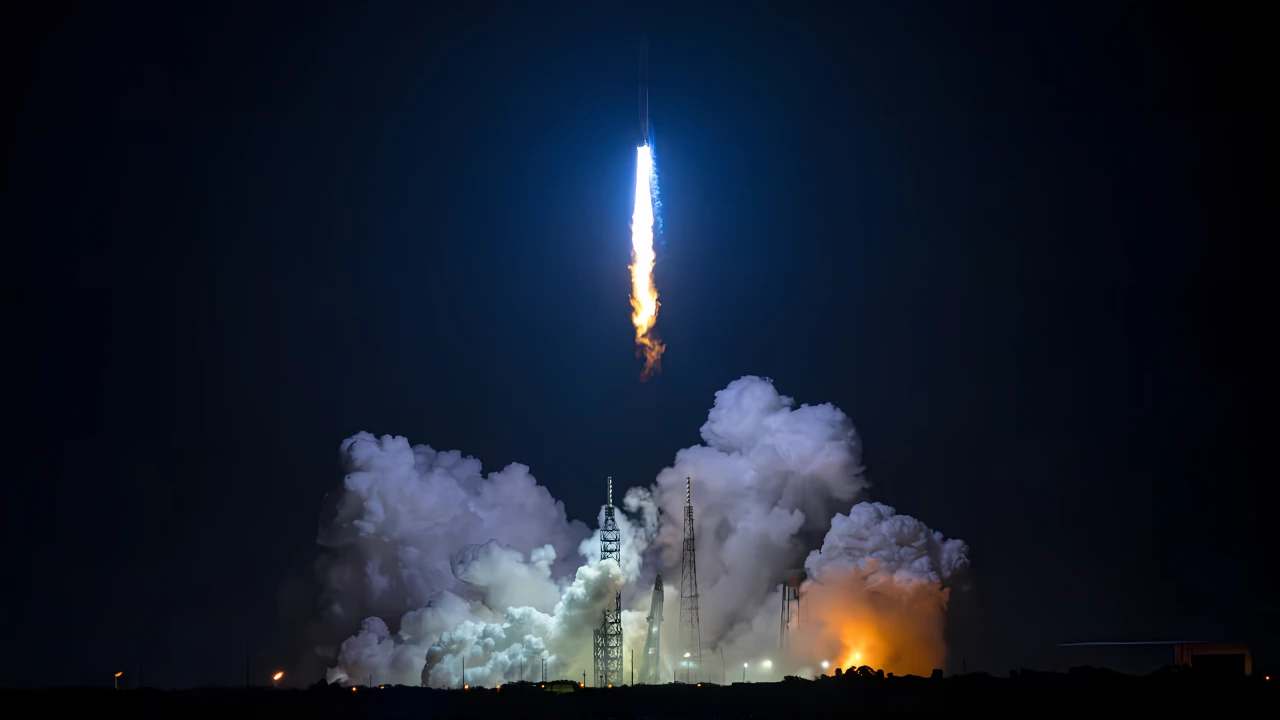 Blue Origin’s New Glenn lifts off for the first time, January 2025. Credit: Blue Origin
One of the BE-3U engines on the upper stage failed to deliver enough thrust during the second burn to put the spacecraft into the desired orbit, Blue Origin CEO Dave Limp acknowledged. The Federal Aviation Administration confirmed it is conducting a mishap investigation and the vehicle will remain grounded until the agency is satisfied that all relevant systems do not pose a risk to public safety. Chief Strategy Officer Scott Wisniewski said the incident did not disrupt the manufacturing pipeline, as AST SpaceMobile already has 33 satellites in advanced stages of production at its factory. The company has filed insurance claims and is hoping to recoup a portion of the satellite and launch costs under its existing policy, he added. Both companies are continuing to work together to return New Glenn to the launch pad as soon as possible.
Expanding the Launch Strategy
One of the key points from the investor briefing was that AST SpaceMobile is not depending on a single launch provider. The company’s satellites were built to be launch-vehicle agnostic, meaning they can fly on a variety of heavy rockets beyond SpaceX and Blue Origin, Wisniewski explained. Five BlueBird satellites can fit into a United Launch Alliance Vulcan configuration, he noted, and the company has been developing partnerships across the commercial launch industry for years to reduce its reliance on any single provider. This was already part of the programme before the current challenges arose, and the April incident has only strengthened the case for it.
 BlueBird 6 array fully deployed in low-Earth orbit. Credit: AST SpaceMobile
This is one of the company’s strongest assets in its efforts to rapidly scale up its constellation. Management confirmed it has secured enough contracted launch capacity to meet its goal of 45 satellites by year’s end, at an average cadence of one launch every one to two months. To provide continuous service in major markets like the United States, Europe and Japan, between 45 and 60 BlueBird satellites will be needed in orbit, and approximately 90 in total to reach additional markets worldwide, CFO Andrew Johnson told investors. First-quarter revenue also came in at 14.7 million dollars, up from 718,000 dollars in the same period last year, driven largely by commercial gateway deliveries and government contract milestones.
Technical Progress and the Road Ahead
While recent attention has focused on the launch failure, it is worth acknowledging the technical milestone the company reached earlier this year. AST SpaceMobile announced in February that the communications array aboard BlueBird 6 had successfully unfolded in low-Earth orbit. Spanning nearly 2,400 square feet, it is the largest commercial communications array ever deployed in LEO and roughly three times the size of the arrays on BlueBirds 1 through 5, the company’s earlier satellites currently in orbit. BlueBird 6 was launched in late December on an Indian Space Research Organisation LVM3 rocket, which set its own record as the heaviest payload the vehicle had ever carried into space.
The scale of the BlueBird 6 array matters because its size is what allows the satellite to communicate with ordinary, unmodified smartphones on the ground, supporting peak data speeds of 120 Mbps and full 4G and 5G broadband services. This is the core of what AST SpaceMobile is building, a space-based cellular network for users in remote regions where ground infrastructure is unavailable or unreliable. With a full production pipeline, a diversified launch calendar, and revenue growing steadily from a low base, the company is treating the BlueBird 7 loss as a temporary disruption rather than a fundamental obstacle to its plans. The road ahead remains technically demanding, but AST SpaceMobile has given little indication that its broader commercial ambitions are anything other than firmly intact. For now at least, the company appears to have both the financial reserves and the operational flexibility needed to keep moving forward without breaking stride.