
Multi-Billion Deal with Airbus Strengthens EU Satellite Capabilities
Jan 17, 2026
European satellite operator Eutelsat has finalized a major deal with Airbus Defence and Space for 340 satellites to replenish and enhance its OneWeb low Earth orbit constellation. The companies announced the deal on January 12, representing an important step forward for European space infrastructure. This order follows a December 2024 agreement in which Eutelsat contracted with Airbus for 100 satellites, bringing the total number of satellites ordered to 440. Deliveries are scheduled to commence at the end of 2026, with production taking place at Airbus’s Toulouse facility on a newly installed production line.
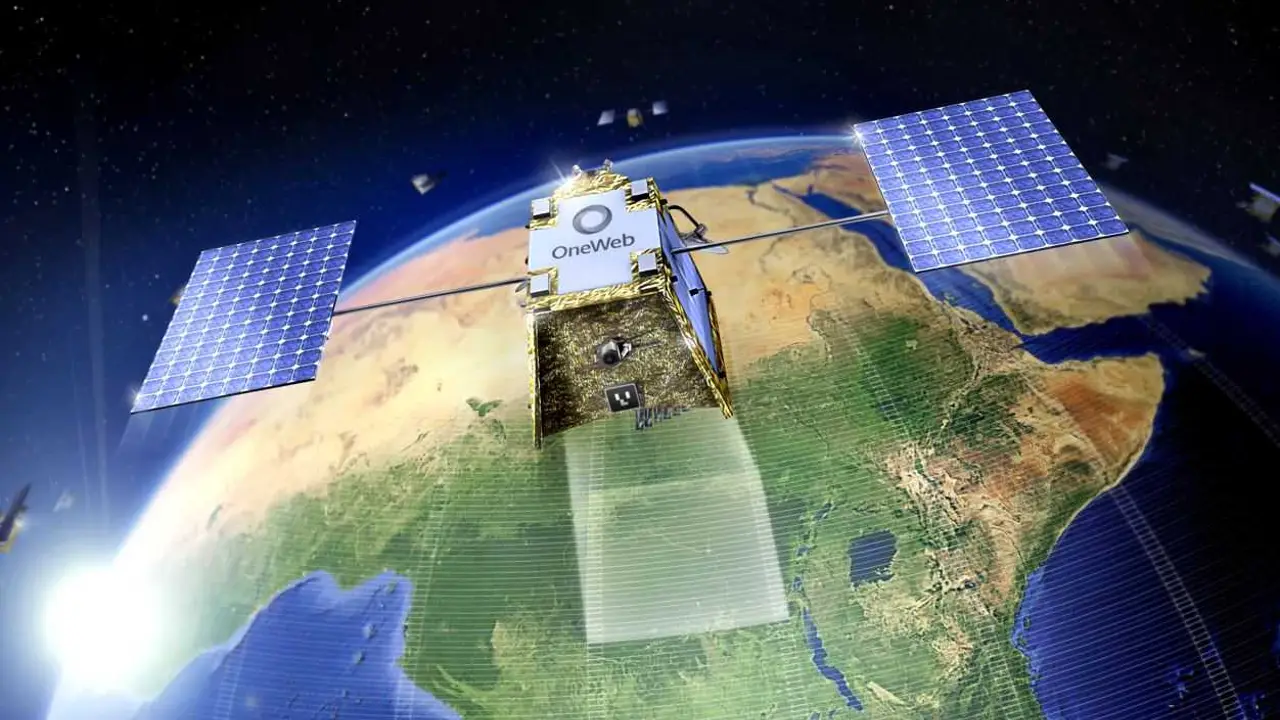 Artist’s rendering of a Eutelsat OneWeb LEO satellite. Credit: Eutelsat OneWeb
Jean-François Fallacher, Chief Executive Officer of Eutelsat, said that he was delighted to maintain the relationship with Airbus in acquiring these new satellites. As Fallacher puts it, the investment guarantees constant service to a growing number of clients who depend on the constellation’s unique capabilities, in particular, its global connectivity and extremely low latency. He has indicated that the procurement decision supports the ambitious growth plans of Eutelsat, noting the company’s achievement of a remarkable growth of 80 percent in revenue in 2025. The executive also highlighted the fact that these improved orbital resources would not only help the company to serve its diversifying customer base but also improve its competitive standing in an ever-growing satellite communications marketplace.
From Airbus’s perspective, the contract validates the aerospace firm’s technical capabilities in the LEO satellite manufacturing domain. Alain Fauré, who leads Space Systems operations at Airbus, characterized the procurement as a confirmation of his company’s engineering proficiency and production excellence. He drew attention to the three-decade relationship between Airbus and Eutelsat, describing this latest agreement as the next milestone in their long-standing partnership. The aerospace manufacturer’s official communications highlighted what this means for European technological independence, noting that the project advances continental self-sufficiency in critical space infrastructure. This focus on keeping capabilities in-house reflects growing European worries about retaining indigenous capabilities in strategically important technological sectors.
The ordered satellites will serve as replacements for the first generation of spacecraft in the constellation with most of them already having been launched into orbit between 2020 and 2023. These groundbreaking units are projected to end their intended service life by 2027-2028, creating an urgent need for succession planning. The new spacecraft will feature significant technological advancements compared to the previous ones and will have advanced digital channelization systems, which will enable the satellites to have advanced processing capabilities. The architectural enhancements are designed to provide better operational efficiency and flexibility throughout extended missions. In particular, Ramon.Space, a space technology company, won a contract in May to deliver digital payload systems to at least 70 spacecraft of the first 100-unit order of spacecraft, the elements of which are intended to enable them to integrate seamlessly with the Eutelsat geostationary satellite fleet and the future IRIS² network currently being built.
While the exact price of the agreement remains confidential, Eutelsat’s earlier budget estimates indicated total costs of around 2.2 billion euros for the complete 440-satellite program, spread across a five-year period from 2024 through 2029. To finance this ambitious expansion, the company secured 828 million euros in November through investments from key stakeholders such as the French and UK governments, India’s Bharti group, maritime giant CMA CGM, and FSP, an investment consortium representing seven French insurance firms. These same investors contributed an additional 670 million euros in a subsequent funding round revealed in mid-December. With France taking the lead role, this combined 1.5 billion euro capital injection in 2025 was designed to bolster Eutelsat’s competitive capabilities against rivals like Amazon LEO and other emerging satellite networks entering the low Earth orbit broadband market.