
Can Rocket Lab Fully Integrate the Supply Chain?
May 21, 2026
Rocket Lab has announced the acquisition of Motiv Space Systems, a California-based company specializing in space robotics, precision mechanisms and motion control systems for spacecraft. The deal, expected to close during the second quarter of 2026, will see Motiv rebranded as Rocket Lab Robotics. The acquisition price was not disclosed. Rocket Lab founder and CEO Sir Peter Beck described the company’s acquisition strategy as straightforward but effective, explaining that the approach centers on identifying the best space technologies that have struggled to scale and bringing them into the Rocket Lab ecosystem, where resources, expertise, and manufacturing capacity can make those technologies more accessible and affordable for the broader space industry and its increasingly ambitious customers.
 Motiv Space Systems promo. Credit: Motiv Space Systems
The acquisition is part of Rocket Lab’s strategy to vertically integrate satellite production on constellation scale, a plan the company has been executing with a series of targeted acquisitions and development initiatives. Motiv’s capabilities fill one of the last missing pieces in that strategy, namely the ability to design and manufacture solar array drive assemblies, antenna and propulsion gimbals, filter wheels, focus mechanisms and precision drive electronics in-house. These have traditionally been costly and in limited supply, causing production delays for companies trying to launch satellite constellations rapidly. By bringing Motiv in-house, Rocket Lab aims to cut costs, reduce external dependencies and accelerate production timelines.
Motiv’s Heritage and What It Brings to Rocket Lab
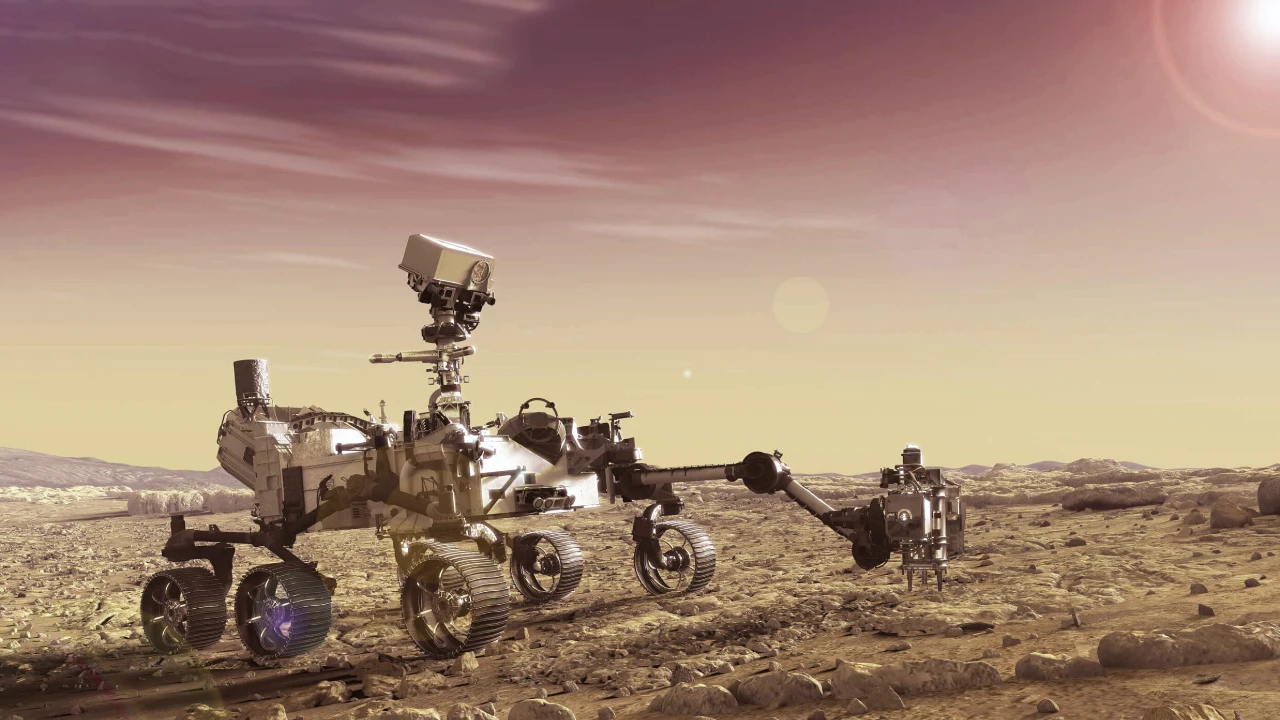
Motiv has gained a reputation for years of providing high performance robotics and mechanisms for some of the most challenging missions in space exploration history. The company is best known for its robotic arm for NASA’s Mars Perseverance rover and precision mechanisms for the CADRE lunar rover and other scientific instruments and spacecraft subsystems. The company’s ability to operate reliably in harsh environments, such as the frozen surface of Mars and the vacuum of deep space, is a capability few space robotics companies can boast, and it’s exactly this proven track record that makes the acquisition so valuable to Rocket Lab as it seeks to grow its business into planetary exploration and national security programs.
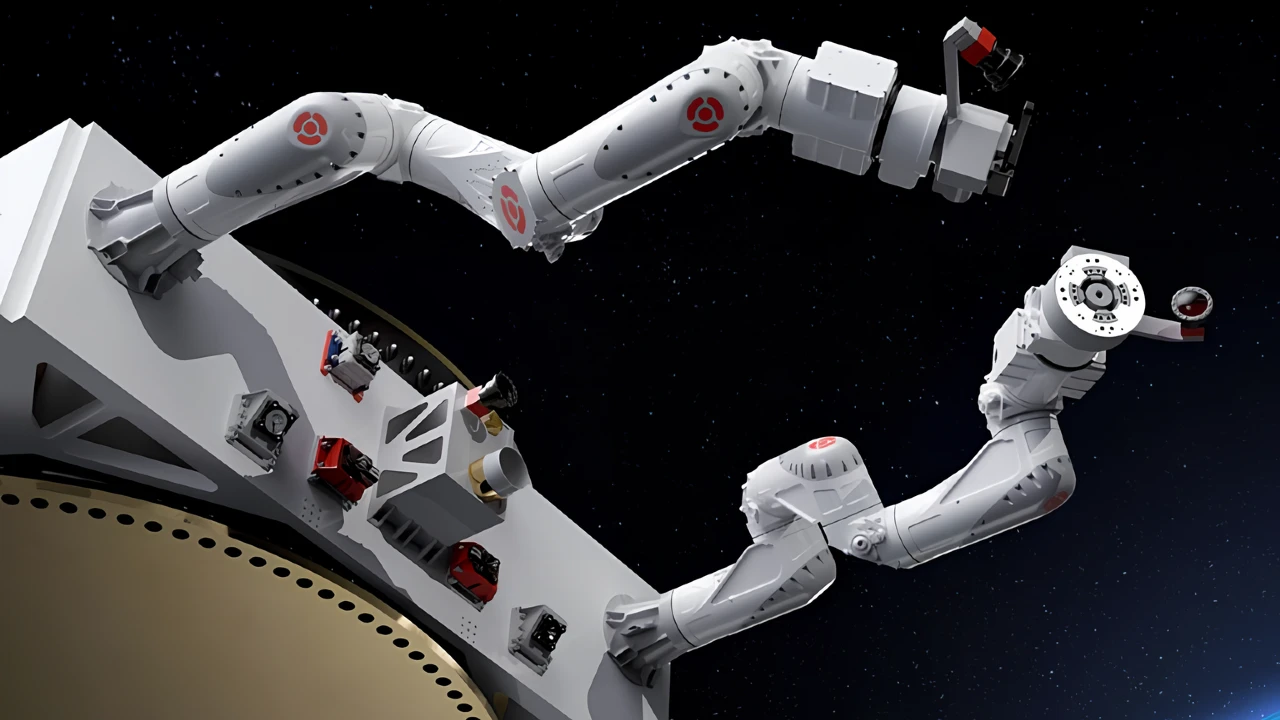 Motiv Space Systems promo. Credit: Motiv Space Systems
Motiv brings approximately 50 engineers and technicians with deep expertise in multi-degree-of-freedom robotic arms, actuators and drive electronics. The company’s manufacturing plants in Pasadena, California will also join the company’s expanding network of advanced space manufacturing and development sites in Virginia, Colorado, Maryland, New Mexico, Arizona, Canada, Germany and New Zealand. The deal was a logical progression for Motiv Space Systems, said CEO Chris Thayer, as it would enable the company to scale its development and serve a larger customer base that would open up a new direction for the company that otherwise would have been impossible.
Future Missions and the Road to Mars
The acquisition of Motiv, in addition to the immediate industrial advantages, will also enable Rocket Lab to take part in some of the most ambitious exploration missions that are being considered in the next decade. The agreement puts Rocket Lab in a position to be a significant contributor to future lunar and planetary projects, including a commercial Mars Sample Return mission, said Beck. The company has already been pushing for a commercial Mars sample return mission, and the integration of Motiv’s robotics expertise, including systems designed for surface operations like sample collection, instrument deployment, and on-orbit assembly, makes such a mission much more feasible and opens up new mission scenarios that would have been hard to achieve on their own.
 Rocket Lab promo. Credit: Rocket Lab
But Beck was careful to moderate expectations of Rocket Lab’s involvement in NASA’s new Artemis lunar program, which has been transitioning to a lunar base and increased frequency of lander missions. He said the company prefers to run in a supportive role, not as a prime contractor on the lunar contracts, because of the unpredictability of large lunar programs, which can change direction at any time, leaving contractors with financial and operational uncertainty. He cited the planned cancellation of the lunar Gateway as an example of the type of instability that can make headline commitments dangerous, and made it clear that Rocket Lab would rather be a reliable supplier of critical components and subsystems for such missions than a prime contractor that could be caught off-guard at any point by a programmatic change.
The Record Launch Contract and Neutron’s Progress
Alongside the Motiv announcement, Rocket Lab revealed the biggest launch contract in the company’s history, underscoring the growing appetite among customers for reliable access to space across a range of vehicle classes. The agreement, signed by a confidential customer, includes five launches of the Neutron medium-lift rocket, as well as more Electron launches, taking place between 2026 and 2029. The total value of the contract is also higher than the previous record, for 20 launches of the suborbital version of Electron, HASTE, announced in March, said Beck. Significantly, Beck stressed that no price concessions were made to clinch the deal. He said pricing for the Neutron and Electron launches is fully consistent with commercial pricing and the company’s long history of not offering a discount to fill a launch manifest, a principle he said reflects the strength of demand rather than any willingness to compete on price alone.
The contract also signals growing confidence in Neutron as a commercial product despite the rocket not yet having flown. Rocket Lab had initially been reluctant to sell Neutron launches before a first flight, but strong market demand led the company to begin booking missions by late 2024 without needing to offer reduced pricing. Beck confirmed that the first launch of Neutron remains targeted for the fourth quarter of 2026, acknowledging that the schedule is aggressive but expressing confidence in the progress made following a January incident in which a first-stage tank ruptured during testing. He said the team had made significant advances in the tank design, improving both structural strength margins and manufacturability. Looking further ahead, the company is planning three Neutron launches in 2027 and five in 2028, with the record contract helping to fill a manifest that Beck said is already building quickly through the end of the decade.