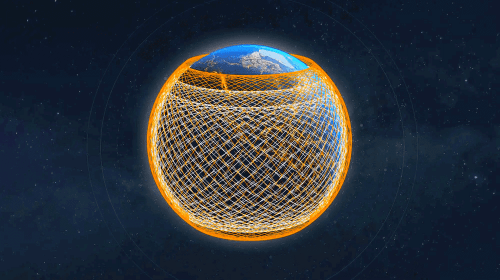

Can SES Finally Deliver on Its MEO Promise After Years of Setbacks?
Mar 18, 2026
SES announced on March 5, 2026 that the ninth and tenth satellites in its O3b mPOWER Medium-Earth Orbit (MEO) connectivity constellation were now fully operational, a major step forward for the program. The milestone increases the capacity of the constellation as a whole and brings SES closer to its goal of a fully deployed 13-satellite system. With three more satellites yet to be launched in the second half of 2026, the company is continuing steady momentum toward full deployment.
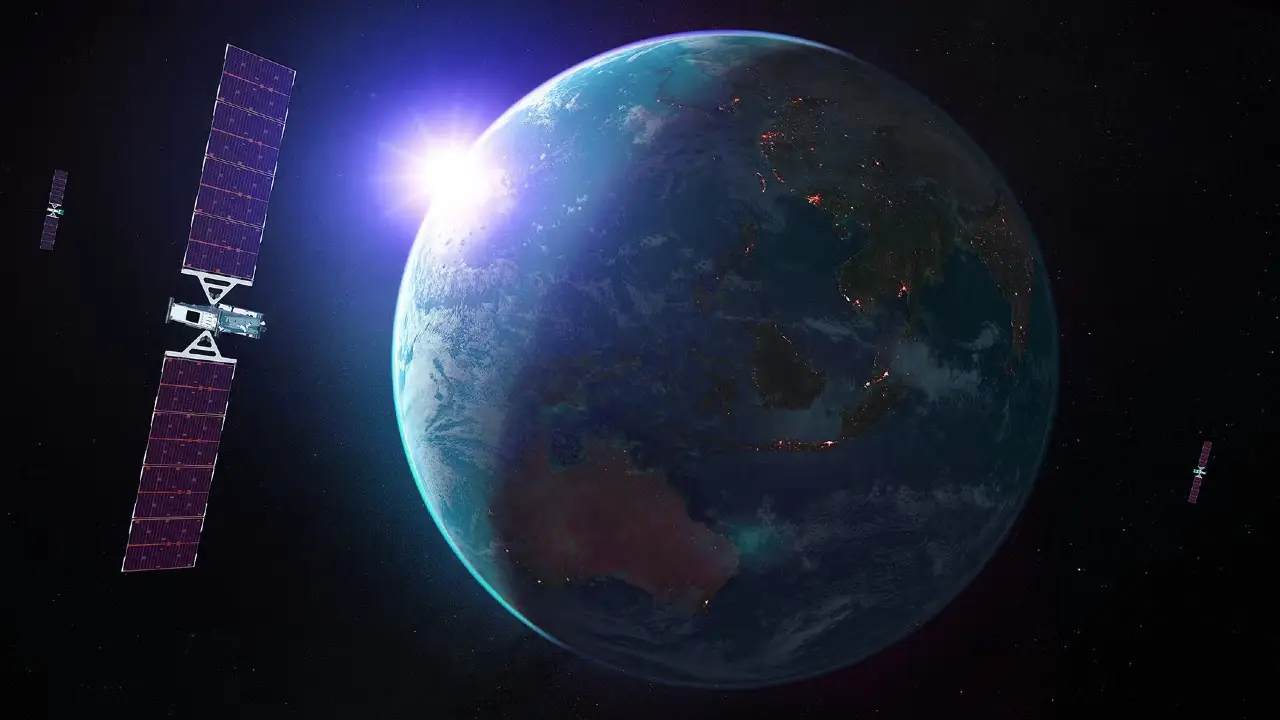 SES 03b mPOWER promo. Credit: SES
The road to this point has been far from smooth. Back in late 2023, SES announced that four of the first satellites on orbit had suffered from sporadic and sometimes non-recoverable power module switch-offs, which caused the company to change the entire deployment strategy. SES and manufacturer Boeing agreed to amend their contract with both parties sharing risk and capital expenditure – Boeing would upgrade five of the remaining satellites and add two totally new spacecraft to bring the constellation to 13. That crisis also delayed the launch date of the commercial service from late 2023 to the second quarter of 2024, with SES acknowledging at the time that the delay would lop a mid-single digit percentage off its 2024 revenue and adjusted EBITDA.
Despite those early hiccups, SES declared O3b mPOWER operationally ready in April 2024, with six satellites on orbit and services starting to roll out to customers. At that point in time, the company was positioning the system as a unique offering in the satellite connectivity market, arguing that because it had access to GEO, MEO and LEO orbits simultaneously, it was an “all-orbit solutions provider.” The system was designed to achieve speeds of tens of megabits per second to multiple gigabits per second, and was aimed at the mobility, government, enterprise and cloud markets. Boeing’s vice president of Space Mission Systems said at the time that the successful deployment was a watershed moment for the satellite industry in general.
The ninth and tenth satellites now online contain a redesigned power module – a direct response to the failures that plagued the first four spacecraft. This hardware revision, developed by Boeing, replaces the components that caused the problems in the past, and is expected to provide better reliability for the rest of the constellation’s operational life. SES CEO Adel Al-Saleh said the added capacity not only strengthened what the company could deliver today, but also sent a message for what was to come. He added that with ten of thirteen satellites now launched and three more on track for later in the year, SES was on track to completely deploy O3b mPOWER and achieve a further significant capacity increase by 2027.
O3b mPOWER serves a wide variety of global customers including governments, telecommunications operators and cruise lines, which all rely on the system’s high throughput and low latency MEO connectivity. The completion of the full 13-satellite constellation will be the culmination of a program that has weathered technical failures, contract renegotiations and launch delays over the course of several years. SES has consistently maintained that the mitigations implemented in the wake of the 2023 power module crisis have been sufficient to ensure existing customers are protected, while ensuring there is scope for new business growth. Once the last three satellites are deployed, the constellation will deliver on the significant capacity promises that originally defined the O3b mPOWER program.