
Can Traditional Financial and Engineering Models Survive Beyond LEO?
Jun 23, 2026
The commercial space industry is at a turning point. For years, operators have focused on low Earth orbit LEO, developing cost effective manufacturing and business models based on high volume satellite deployments. Yet, the economic model supporting the space insurance market is fracturing, and the engineering principles developed for LEO are failing in more challenging orbital environments. These are not isolated issues. They represent two sides of the same underlying transformation shifting from short term transient missions to a permanent multi orbit infrastructure economy, where both financial models and physical hardware are no longer aligned with mission reality.
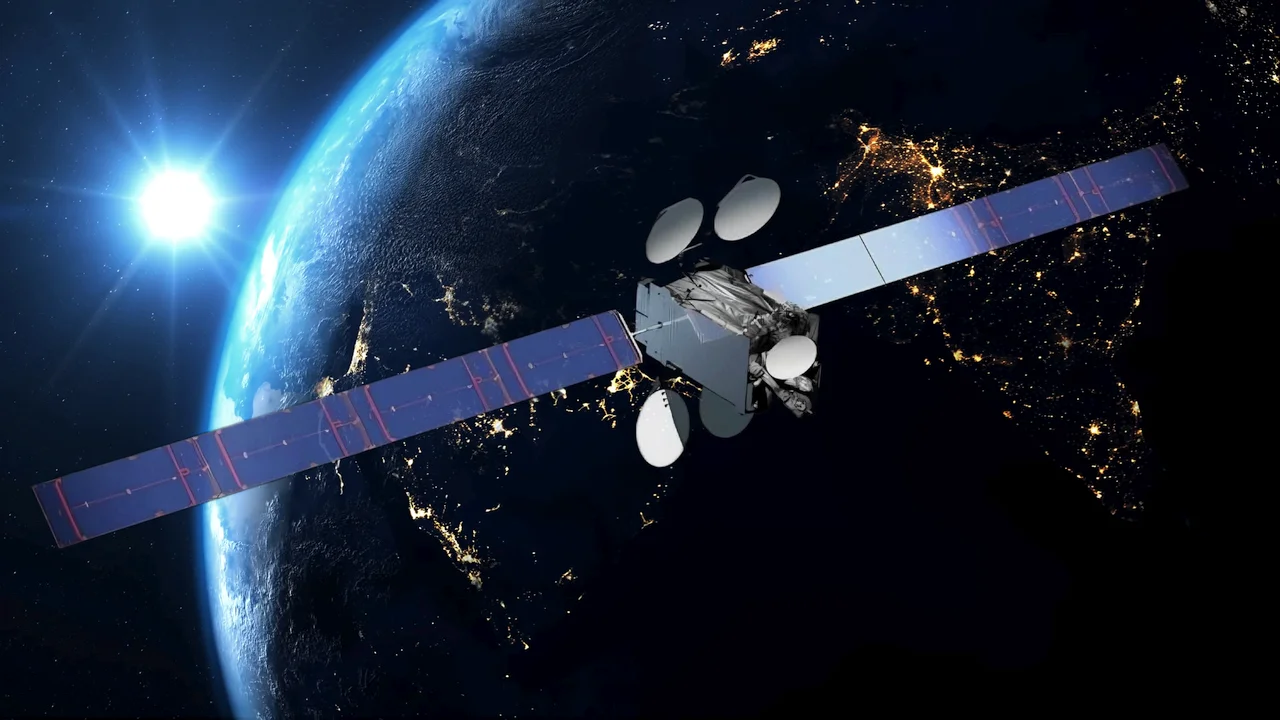 3D rendering image of Intelsat 33e. Credit: Google
As key operators structurally shift away from massive GEO platforms toward proliferated LEO and multi orbit architectures, the space insurance market is losing its primary source of premium volume. Recent cancellations of three major GEO satellites by SES and Eutelsat, valued at 300 million each, have wiped out nearly 500 million in annual premium opportunities. Even legacy giants like Viasat are abandoning these large architectures following the devastating losses of 2023, when claims tripled the annual premium pool. While the sector managed a cautious recovery with a 390 million profit in 2024 and 650 million in 2025 despite a late 400 million claim, this shift threatens the long term viability of commercial underwriting. Industry experts acknowledge that while the absence of these GEO cash cows will depress 2026 insurance revenue below 2025 levels, a projected surge in insured constellation deployments offers some hope for stabilization in 2027 and 2028, although this shift simultaneously introduces new technical risks that current insurance models are not designed to capture.
The LEO Problem and New Market Challenges
The commercial space industry is moving to low Earth orbit LEO constellations and smaller satellites, which are an inherent mismatch with current insurance products. Space insurance experts estimate that only about 5 to 7 percent of LEO satellites are insured, while about half of all GEOs are insured at least during the launch phase. This is a dramatic difference, because traditional insurance products were developed for individual high cost assets, not a myriad of smaller spacecraft operating as interconnected systems. As deployment scales increase, the risk is no longer tied to a single satellite failure but to the degradation of entire operational networks over time, something that becomes even more critical as missions extend into harsher orbital regimes.
 Visualization of Intelsat 33e break-up in GEO orbit. Credit: Comspoc
New companies entering the insurance brokerage market are trying to fill these gaps with technological innovation and by changing the way they do business. California based Charter Space, a fintech firm, has created mission management software that it says can help companies of all sizes streamline their underwriting processes, as the traditional model of insurance underwriting is not equipped to handle the volume of new demand and new launches expected. The company’s management has said that it is crucial to break away from the tailored underwriting model by accommodating much higher quantities of launches and particularly new and smaller spacecraft designs. Access to a bigger pool of insurable assets can provide an opportunity to mitigate some of the premium income lost due to the decline of large GEOs, especially for smaller companies who can gain access to conservative mainstream financial institution funding that still considers space to be exotic and high risk, yet this financial adaptation remains constrained by the unresolved physical reliability challenges of operating beyond LEO.
Material Science and Environmental Degradation in MEO
A more fundamental technical crisis involves orbital hardware itself, directly reinforcing the limitations now visible in insurance and financial models. In 2026, the space industry is poised to enter a multi orbit economy, taking low Earth orbit manufacturing practices to medium Earth orbit, a much more challenging environment between 2000 and 36000 kilometers altitude. In MEO, the intense ionizing radiation, extended periods of vacuum exposure and extreme thermal cycling assault spacecraft materials from multiple fronts, making LEO hardware unsuitable for the harsh conditions of MEO. NASA found that the traditional high heritage LEO design practices were not adequate for MEO, and the Van Allen Probes proved it. Engineers had to use highly customized architecture with significant structural shielding, radiation hardened electronics and specialized fault management software, highlighting that long duration reliability cannot be assumed from LEO experience.
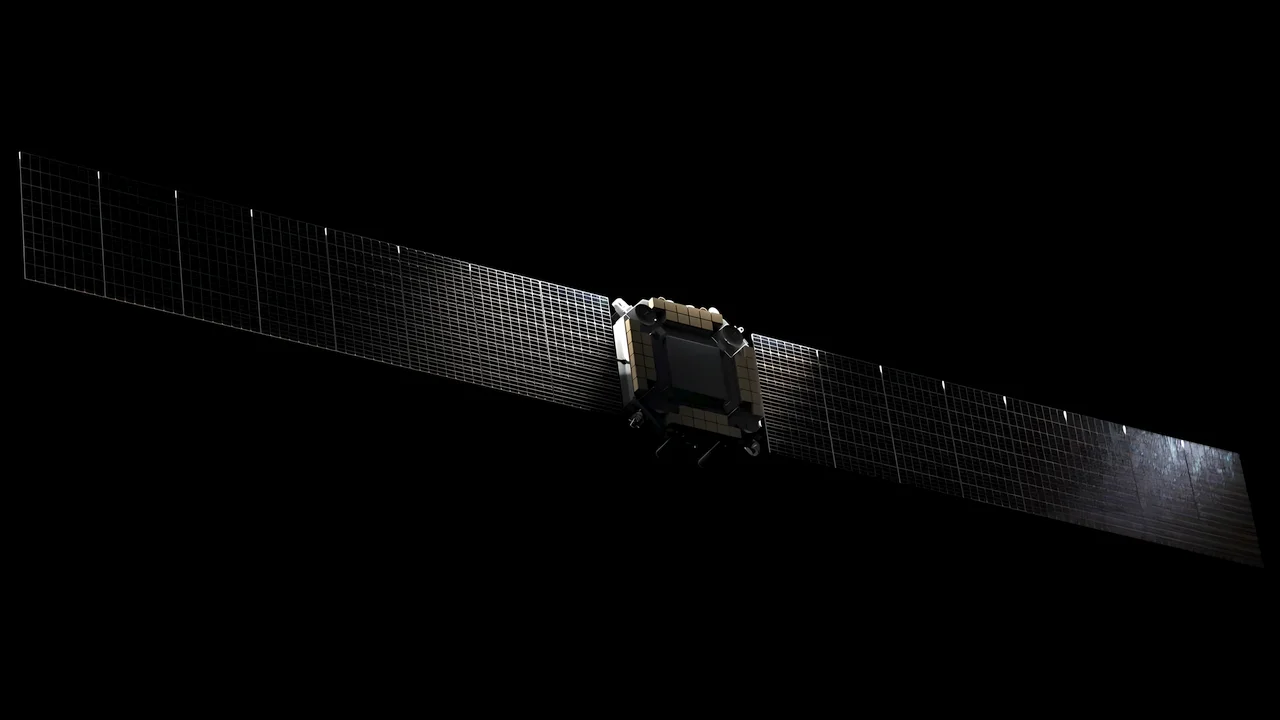 3D Render of K2 Space Mega Class MEO Satellite. Credit: K2 Space
The susceptibility of conventional electronics is just the tip of the iceberg of a broader materials science problem. The epoxy resin and carbon fiber composites used in modern spacecraft are extremely strong and lightweight and are used extensively. Carbon fibers provide tensile strength and the epoxy resin is the binding matrix. This epoxy resin however suffers from two mechanisms of degradation in MEO. High energy radiation disrupts the key polymeric bonds in resin systems, and outgassing the evaporation of volatile compounds and moisture under vacuum and thermal cycling conditions occurs and carries material away from the resin to condense on sensitive optics solar panels and client satellites being serviced. This double threat compromises structural integrity making once resilient polymer matrices brittle and susceptible to micro cracking and catastrophic failure of pressurized propellant tanks, directly increasing the probability of mission loss events that are difficult for insurers to model or price.
Solutions and the Path Forward
The new orbital economy therefore requires a rethinking of both material engineering strategies and the financial frameworks built on top of them, not just scaling up current LEO manufacturing methods. The aerospace industry needs to create and test new resin formulations that are designed at the molecular level to resist outgassing in deep space and repeated docking stresses while maintaining the lightweight characteristics that make orbital logistics economically feasible. NASA supported polybenzoxazines and cyanate esters also have potential, but these materials are frequently formulated at high cost and require high temperature curing, which can be challenging for production economics. Pre preg composite fibers which are pre impregnated with special polymers under carefully controlled laboratory conditions provide superior uniform consistency allowing for thinner stronger overwraps to withstand the rigors of MEO, forming the technical foundation required for predictable long duration performance.
The next phase of the new orbital economy requires shifting advanced manufacturing from bespoke deep space probes to high volume commercial production. Getting hardware to these higher altitudes is only half the battle, but keeping commercial infrastructure alive in the harsh MEO environment is the real test. Ultimately, the industry’s bottleneck lies at the intersection of material science and financial architecture. Short term launch and burn materials cannot sustain a multi orbit economy that demands years of active service from orbital gas stations and transfer vehicles. The market will remain constrained until material engineers deliver novel polymers that guarantee long term structural stability, because only then can underwriters transition from uncertainty driven pricing to scalable risk models. Until the physical reliability of these composite structures is proven at the atomic level, insurance premiums will remain prohibitively high, limiting capital inflow and slowing the realization of a sustainable infrastructure economy.