
How Satellite NTN Reshapes Connected Vehicle Resilience
Feb 24, 2026
Viasat recently demonstrated a bi-directional voice call from a connected vehicle, highlighting the potential for satellite communications to play a complementary role alongside terrestrial cellular networks in automotive safety applications. The demo, which took place at a 5G Automotive Association (5GAA) event in Sacramento, showed a production electric vehicle making a live voice connection using satellite infrastructure instead of traditional cellular coverage. Industry observers said the test was a practical validation of non-terrestrial network (NTN) capabilities built into commercially available chipsets. The exercise made clear how satellite connectivity is increasingly being positioned as an extension of 5G rather than a communications system in its own right.
 Viasat logo. Credit: Viasat
The demonstration was based on a vehicle with a standard automotive antenna and a Qualcomm modem that can operate with NTN. Data transmission was optimized using advanced audio compression technology designed for narrowband IoT environments, enabling voice communication at low data rates compatible with mobile satellite service spectrum. Company representatives said that the goal was to demonstrate operational feasibility under realistic conditions rather than to showcase experimental hardware. Analysts took the event to be part of a larger industry push to normalize satellite connectivity as a built-in feature of connected vehicles of the future.
Safety Applications Driving Early Adoption
Automotive connectivity strategies are starting to be influenced by safety use cases, specifically cases where drivers are traveling outside cellular coverage. According to company executives speaking at the event, satellite-enabled communications would be able to provide a critical back-up layer when terrestrial networks are unavailable because of geography, infrastructure limitations or disaster conditions. The demonstration focused on emergency situations like accidents, vehicle breakdowns or other roadside emergencies where immediate communication may affect response outcomes. Observers suggested that the integration of satellite capability into vehicles could help reduce reliance on personal smartphones, which may be inaccessible or damaged during accidents. Industry representatives noted that a satellite-equipped vehicle adds a dedicated, independent layer of safety that functions regardless of the condition of the driver or their personal devices. In scenarios such as fires, rollovers, or remote wilderness breakdowns, the ability to initiate a distress call directly from the vehicle itself could prove critical.
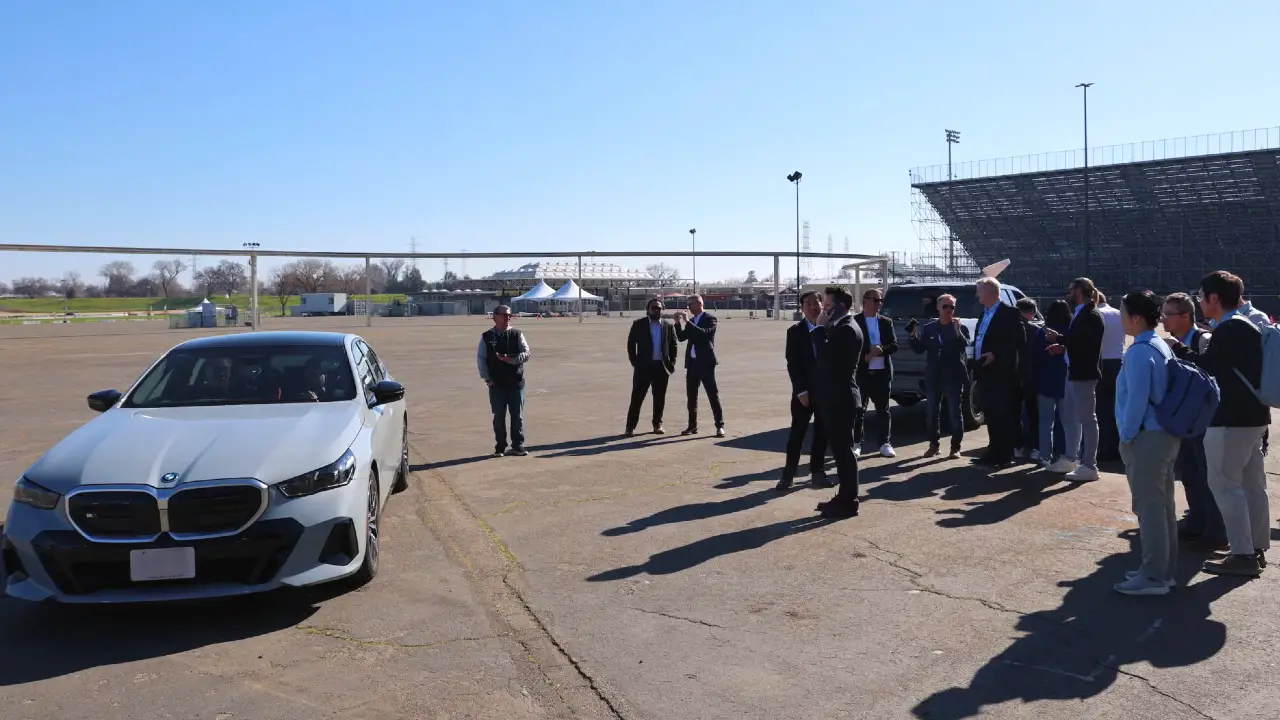 Viasat demonstrates a satellite voice call from a connected vehicle at a 5GAA event. Credit: Viasat
Industry stakeholders increasingly view redundancy in communications systems as a fundamental design principle for connected mobility. Representatives said satellite connectivity could help provide drivers with greater peace of mind knowing they can always communicate wherever they are. Analysts said automakers are considering how such capabilities could be phased in, perhaps starting with off-road vehicles, high-end models or safety-oriented products. Some manufacturers are expected to prioritize vehicle segments most frequently exposed to coverage gaps, using early deployments to validate the technology before broader rollout across their fleets. Over time, the technology is expected to transition from being an optional feature to a baseline expectation as connectivity becomes synonymous with vehicle safety.
Lessons from 3G Sunset and the Need for Future-Proofing
The drive to make vehicles satellite-enabled is informed, in part, by recent disruptions from the global shutdown of legacy 3G networks. Millions of vehicles lost automatic crash notification and emergency communication services when carriers were forced to retire aging infrastructure, revealing vulnerabilities in the long product lifecycles that are common in the automotive sector. Industry experts have noted that many vehicles were designed around connectivity standards that were obsolete well before the vehicles themselves were at end-of-life. This mismatch served to point out the dangers of only relying on terrestrial network generations that evolve faster than automotive platforms. The 3G sunset exposed a structural problem that had been building for years: automakers had routinely selected the most cost-effective connectivity modules available at the time of production, with little consideration for long-term network compatibility. For many owners, the loss of emergency services arrived without warning and with no viable remedy.
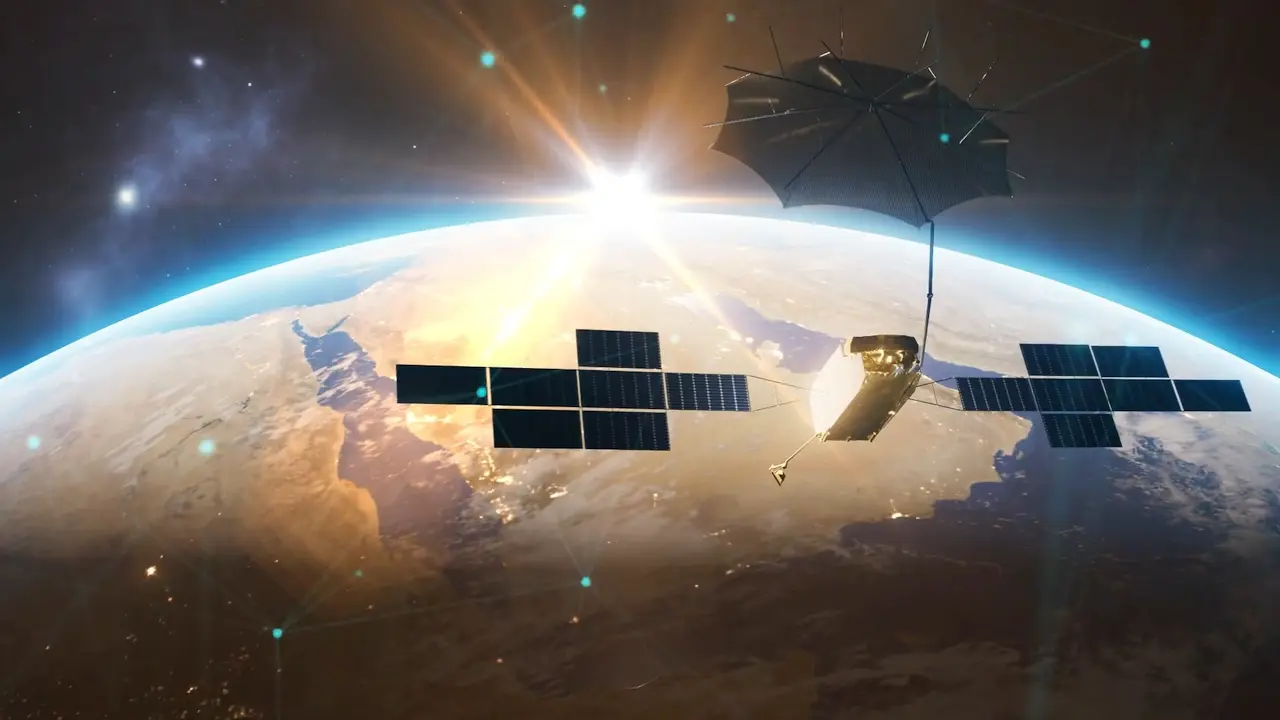 3D rendition of the Thuraya-4 satellite by Space42. Credit: Space42
Executives involved with connected mobility initiatives have suggested that future systems must be able to operate across multiple network transitions. Satellite connectivity, which is independent of regional cellular upgrades, is increasingly considered a long-term complement that can provide continuity of services. Analysts think automakers are now focusing on modular and standards-based architectures for connectivity to prevent similar disruptions to those in the past. Unlike terrestrial cellular generations, satellite-based mobile service spectrum does not follow the same upgrade and retirement cycles, making it a more stable foundation for long-term connectivity planning. The integration of NTN compatible chipsets into mainstream automotive hardware means that in the future, cars could seamlessly roam between terrestrial and non-terrestrial networks without driver awareness.
Shared Infrastructure and the Emerging D2D Ecosystem
The connected car demonstration also fits into wider industry developments around shared satellite infrastructure and direct-to-device (D2D) services. Viasat and Space42 have formed a joint venture called Equatys, bringing together 100 MHz of coordinated MSS spectrum already allocated across more than 160 markets. The venture will leverage existing in-orbit assets — including the Thuraya-4 satellite and Viasat’s current MSS fleet — alongside new LEO satellites, with a stated goal of delivering commercial services within three years. The Equatys model treats satellites as common resources in the same way terrestrial cell towers are shared across operators, inviting spectrum holders, mobile network operators, and financial investors to participate while retaining ownership of their spectrum. The structure is designed to appeal to countries and operators that prioritize data sovereignty, and early interest from chipmakers, device manufacturers, and automakers suggests growing demand for a standards-based alternative that lowers the cost and complexity of adoption.
Industry executives have said such models are designed to reduce the barriers to adoption by enabling multiple operators, manufacturers and service providers to access common infrastructure instead of having to build isolated systems. The proposed ecosystem focuses on harmonized spectrum use and interoperability across regions, allowing countries and operators to engage without giving up control over national spectrum resources. Collaborative infrastructure models may help drive adoption faster by aligning incentives among mobile network operators, device manufacturers, and automotive OEMs. If successful, industry participants expect satellite connectivity to be an invisible layer of global communications, enabling vehicles to be continuously connected no matter where they are.