
Will Amazon and Apple Kill the "No Signal" Message Forever?
Apr 27, 2026
Amazon has made one of the boldest moves in recent satellite industry history by announcing a deal to acquire Globalstar, the veteran mobile satellite services provider, in a transaction valued at approximately $10.8 billion. The agreement gives Amazon full ownership of Globalstar’s existing satellite fleet, ground infrastructure, and — most critically — its mobile satellite services spectrum licenses, which are considered essential real estate in the rapidly evolving and increasingly competitive direct-to-device connectivity race. The deal is expected to close in 2027, pending regulatory approvals and the achievement of certain operational milestones by Globalstar related to its HIBLEO-4 replacement satellite constellation, a timeline that underscores the complexity and scale of the transaction.
 Amazon LEO promo. Credit: Amazon
Globalstar stockholders will be given either $90 per share or an equivalent amount in Amazon common stock as part of the merger, a huge premium compared to the pre-announcement trading price of the company of approximately $73 per share. This news announcement caused an immediate market response, as Globalstar stock soared to $80 on the day of the announcement, indicating a high degree of investor confidence in the strategic reasoning behind the deal. The deal also involves a possible downward revision of $110 million in case Globalstar does not achieve the necessary milestones of its new satellite constellation, which is an indication that Amazon takes its new acquisition seriously in fulfilling its technical promises.
Apple Is Quietly at the Center of This Deal
One of the most consequential — and perhaps underreported — dimensions of this acquisition is the role of Apple, which has been Globalstar’s anchor customer since 2022, when the iPhone maker began using Globalstar’s network to power satellite emergency messaging for its devices. As part of the broader transaction, Amazon struck a separate agreement with Apple to continue providing satellite services for current and future iPhone and Apple Watch models, ensuring that the millions of users who rely on these satellite connectivity features will not see any disruption to the services they depend on. Apple has been covering 95% of the costs associated with upgrading Globalstar’s network, making it a de facto financial partner in the very infrastructure Amazon is now acquiring.
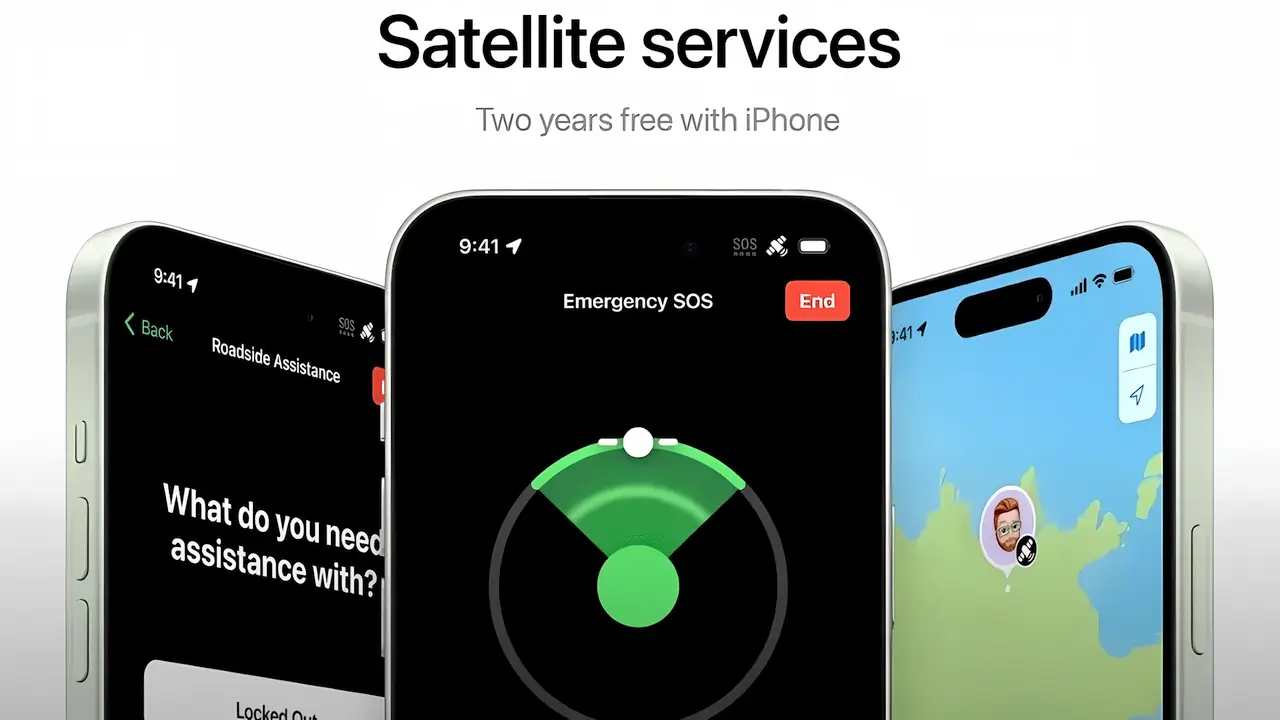 Apple iPhone D2D service promo. Credit: Apple
Apple and Globalstar have a much deeper relationship than a mere service contract. Apple holds a 20% ownership stake in a Globalstar LLC entity set up to own the next-generation C-3 satellite constellation under development in collaboration with Canadian manufacturer MDA Space, which is also assembling the 17-satellite HIBLEO-4 replacement fleet of Globalstar. Analyst Tim Farrar of TMF Associates observed that with Amazon in charge, Apple will probably not have the 85 percent of network capacity that it originally negotiated in its deals with Globalstar, raising serious questions about how much bandwidth will remain available for Apple’s satellite features going forward. Farrar also indicated that it is yet to be determined how much Apple will eventually pay for those services with the new ownership structure and whether the existing free service to the iPhone users can be sustained at scale.
Amazon’s Spectrum Play and the D2D Arms Race
The strategic logic behind the acquisition becomes clearest when viewed through the lens of spectrum. Mobile satellite services spectrum is uniquely valuable for direct-to-device applications because it is already licensed for satellite use, meaning providers do not need to negotiate shared spectrum arrangements with mobile network operators — a significant regulatory and commercial advantage that saves both time and resources. Globalstar CEO Paul Jacobs had previously described the company’s spectrum holdings as critical pieces that complete the broader D2D puzzle, citing their global coverage, priority rights, and compatibility with established hardware ecosystems. By absorbing those assets, Amazon leapfrogs what would otherwise have been years of complex licensing negotiations and regulatory groundwork.
 Amazon LEO promo. Credit: Amazon
Armand Musey, Summit Ridge Group founder and president, asserted that the acquisition would drastically enhance the competitive standing of Amazon in the D2D marketplace, enabling the company to make up on spectrum and possibly jump ahead on deployment schedules. In a research note, William Blair analyst Louie DiPalma observed that the price proposed in the purchase will have significant ripple effects on the wider industry, and will probably raise the perceived value of MSS spectrum assets owned by other operators, including Iridium and Viasat. DiPalma also implied that other satellite industry players would probably react by trying to obtain more spectrum of their own to make a significant contribution to their respective networks so that they could stay competitive.
Amazon’s Own D2D System Is Already in the Works
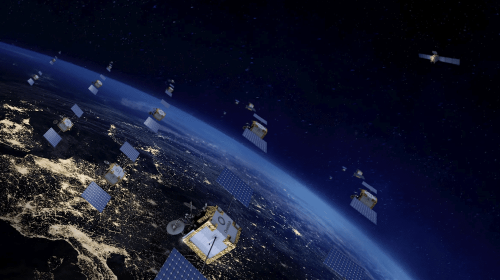
Beyond simply operating what it is buying, Amazon has made clear that Globalstar is just the foundation of something far more ambitious and long-term in its scope. The company announced plans to develop and deploy its own next-generation direct-to-device satellite system, which it described as capable of delivering advanced voice, data, and messaging services to mobile phones and other cellular devices, with substantially higher spectrum efficiency than legacy direct-to-cell systems. Amazon said the new system would be integrated with its first and second-generation Amazon Leo broadband constellations, creating a combined network of thousands of advanced satellites in low Earth orbit, ultimately designed to leave no corner of the globe beyond reach. While the company confirmed it is actively working on satellite design, it declined to share further technical details at this stage.
Panos Panay, the senior vice president of Devices and Services at Amazon, positioned the move as a continuation of a long-standing mission to provide reliable connectivity to the billions of people living or traveling outside the reach of existing terrestrial networks, and claimed that the combination of Globalstar experience and Amazon resources and customer focus would deliver faster and more reliable service to more locations around the globe. Tim Farrar of TMF Associates noted that the general drive is a sign of a trend that is already well established in the terrestrial market, where telcos and cable companies are converging fixed and mobile broadband, and indicated that it is not surprising to see Amazon envisioning the same convergence in the satellite market. The acquisition makes Amazon a vertically integrated player in both broadband and D2D markets — a trend that analysts believe will transform the satellite connectivity market over the next decade.