
Can Amazon’s Launches Catch Up with Its Satellite Factory?
Oct 27, 2026
Amazon has built its 1,000th broadband satellite at its factory in Kirkland, Washington, and the pace of production has changed dramatically. Rajeev Badyal, who runs the program, said it took the team six months to make its first 27 satellites, while the factory can now turn out 27 a week. He explained that building a couple of satellites is straightforward, but building them at scale is exponentially harder, which is why the design had to be suitable for mass production from day one. Badyal added that engineers usually make sure a design works first and think about manufacturability later, so Amazon pushed to do both at once. Even then, he said, working with real hardware exposed gaps in quality, reliability, and parts. The faster production pace has left the company with a growing inventory of satellites.
 Credit: Amazon
Paul Palcisco, the director of production, said the company took an empty 170,000-square-foot building and turned it into a satellite factory over 15 months, while the satellites themselves were still being designed. He noted that the team had to change the factory almost as soon as the doors opened. According to Palcisco, Amazon keeps its highest-value technology in-house, and the propulsion system is designed and built entirely by the company, while some other components come from suppliers with decades of experience. Badyal described the effort as brutal, saying teams worked hand in hand to improve processes, designs, and training. New technicians were skilled but had never worked on satellites before, so defects had to be caught in real time.
Testing That Used to Take Weeks
Palcisco said testing turned out to be the biggest technical challenge of the project. Traditional space testing follows standards written decades ago for NASA, and those procedures can take days or even weeks for each satellite. The challenge, he said, was scale: testing rigorously while matching the factory’s output. Over the last two years, Amazon has combined those methods with high-volume approaches borrowed from consumer electronics, allowing the company to maintain or even increase the rigor of its testing while completing it much faster. Palcisco said checks that once took days or weeks can now be completed in hours. Building and testing a single unit still takes several weeks, although design changes can be incorporated within one to two weeks.
Palcisco explained that the factory now runs at a pace tied to the launch schedule, with a buffer of finished satellites waiting ahead of each rocket. The stated mission is to avoid having a rocket sitting on the pad without satellites ready to fly. Badyal recalled that the team sized the constellation and settled on its architecture within the first three months, before any hardware had been built. He admitted that the biggest worry throughout the process was whether the design would deliver the performance and capacity the company had imagined back in 2018. Only earlier this year, he said, could the team confirm that the silicon, antenna, terminal, and gateway designs were working together as intended.
The Rockets Are the Real Bottleneck
The harder problem has been getting those satellites into orbit. Badyal said Amazon chose a diverse set of launch providers from the start, signing deals with United Launch Alliance, Blue Origin, Arianespace, and SpaceX. Vulcan has been grounded following a solid rocket booster nozzle anomaly, while Blue Origin has faced problems of its own, including a New Glenn vehicle that was destroyed during a pre-launch hot-fire test in May. Badyal said every partner is working around the clock to get Amazon flying, though he admitted that the delays can be frustrating. Amazon can produce satellites faster than it can launch them, which leaves launch capacity as the main constraint on growth. As Badyal put it, if this were easy, everybody else would already be doing it.
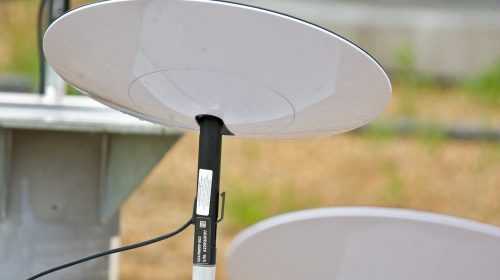
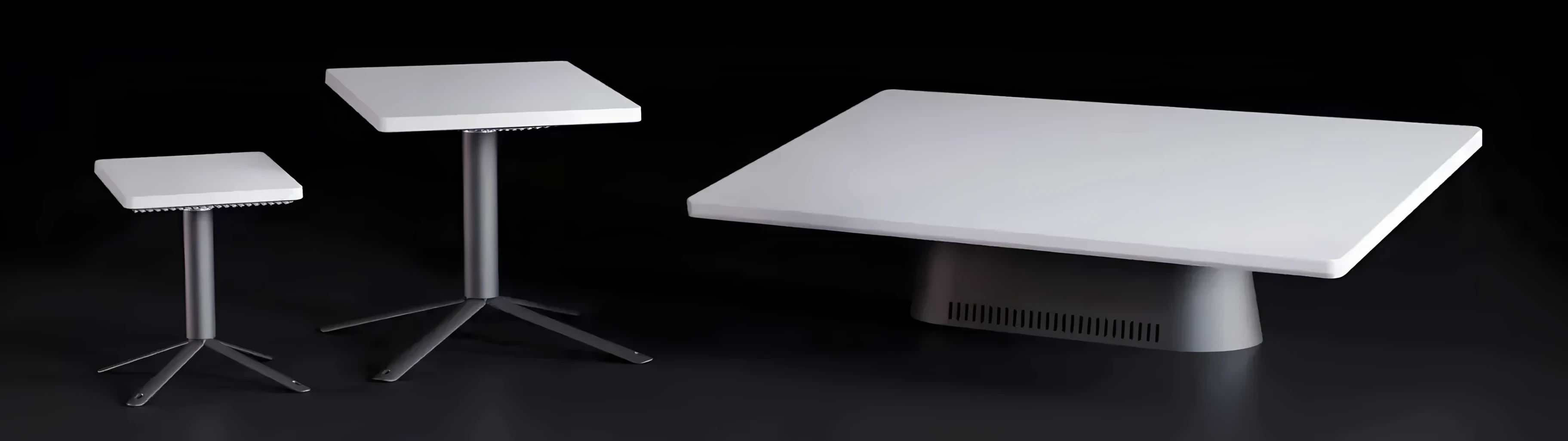 Amazon LEO Flat Panel Antenna Lineup. Credit: Amazon
According to Badyal, Amazon was weeks away from launching on Vulcan, with an Arianespace flight and at least one more Vulcan mission planned before the end of the year. Arianespace has since said the next Ariane 6 flight, carrying 36 Amazon Leo satellites, is targeted for no earlier than November 23. Badyal said the nozzle issue has been fixed and expects a steadier launch cadence moving forward. About 396 satellites are in orbit, unchanged from July, out of a planned first-generation constellation of 3,232. That gap has a cost: the FCC temporarily removed earlier-round processing priority from satellites launched after the July 30 deadline. Amazon can regain that status as early as October 30, 2027, if it certifies that it has built enough satellites for the 50% milestone and secured the launches.
Service Is Due This Year, Rivals Take Notice
Chris Weber, Amazon’s vice president of business, said the plan is to begin initial service in 2026, and Badyal said the satellites already in orbit are enough to start it. Badyal described watching Formula One on his phone over the network, calling that moment after years of doubt pretty special. For business and government customers, Weber said the pitch rests on performance, security, and enterprise-grade features. He said Leo is designed to deliver a gigabit per second on the downlink and 400 megabits per second on the uplink, which he estimated would be roughly three times Starlink’s downlink speed and eight to ten times its uplink speed. Those are Amazon’s stated performance expectations rather than results from a fully launched commercial service.
Weber added that security includes AES-256 encryption and an optional private networking feature that connects the antenna to a customer’s own data center or to AWS without routing traffic over the public Internet. For regular consumers, he said Amazon will focus on value and ease of setup while exploring possible tie-ins with Prime, Prime Video, eero routers, Fire TV, and Ring. Asked about critics who have waited years for Leo to arrive, Weber said the Amazon brand sets a high bar and that people will see the difference when the service launches. Badyal also said a second-generation system has been filed with the FCC and is in design, though he declined to share details. Both executives made it clear that the first generation is only a starting point.