
Can OneWeb Refresh Strengthen EU IRIS² Connectivity Strategy?
Sep 18, 2026
Eutelsat has signed off on a major expansion of its OneWeb satellite fleet, ordering 229 additional satellites from Airbus Defence and Space under an authorization to proceed contract. That brings Airbus’s total OneWeb order book to 669 satellites once you count the two earlier batches, one placed in late 2024 and another in early 2026. The new order is primarily aimed at ensuring service continuity, while also adding capacity and capabilities as the constellation evolves. Some of these new satellites, designated Gen 1.5, will also carry a dedicated payload for the French Defense Ministry, adding a defense dimension to what is otherwise framed as a fleet refresh. Eutelsat said the additional spacecraft will help it progressively replenish and expand OneWeb through 2034 while securing continuity of service for existing and new customers.
 Credit: Eutelsat
Production stays at Airbus’s Toulouse facility, where the current generation is already being built, enabling production continuity and a consistent delivery rate. Eutelsat expects the first satellites from its existing 440-satellite order to arrive next quarter, and it is investing an estimated €1 billion into the additional satellites. As part of this hardware evolution, the new satellites carry advanced digital channelizers for better onboard processing, efficiency and flexibility, along with the ability to host additional payloads beyond OneWeb’s core Ku-band mission. These features represent a technological evolution over the original constellation, which was built in Florida rather than in France, while the current refresh satellites are being manufactured in Toulouse.
Getting the Satellites Into Orbit
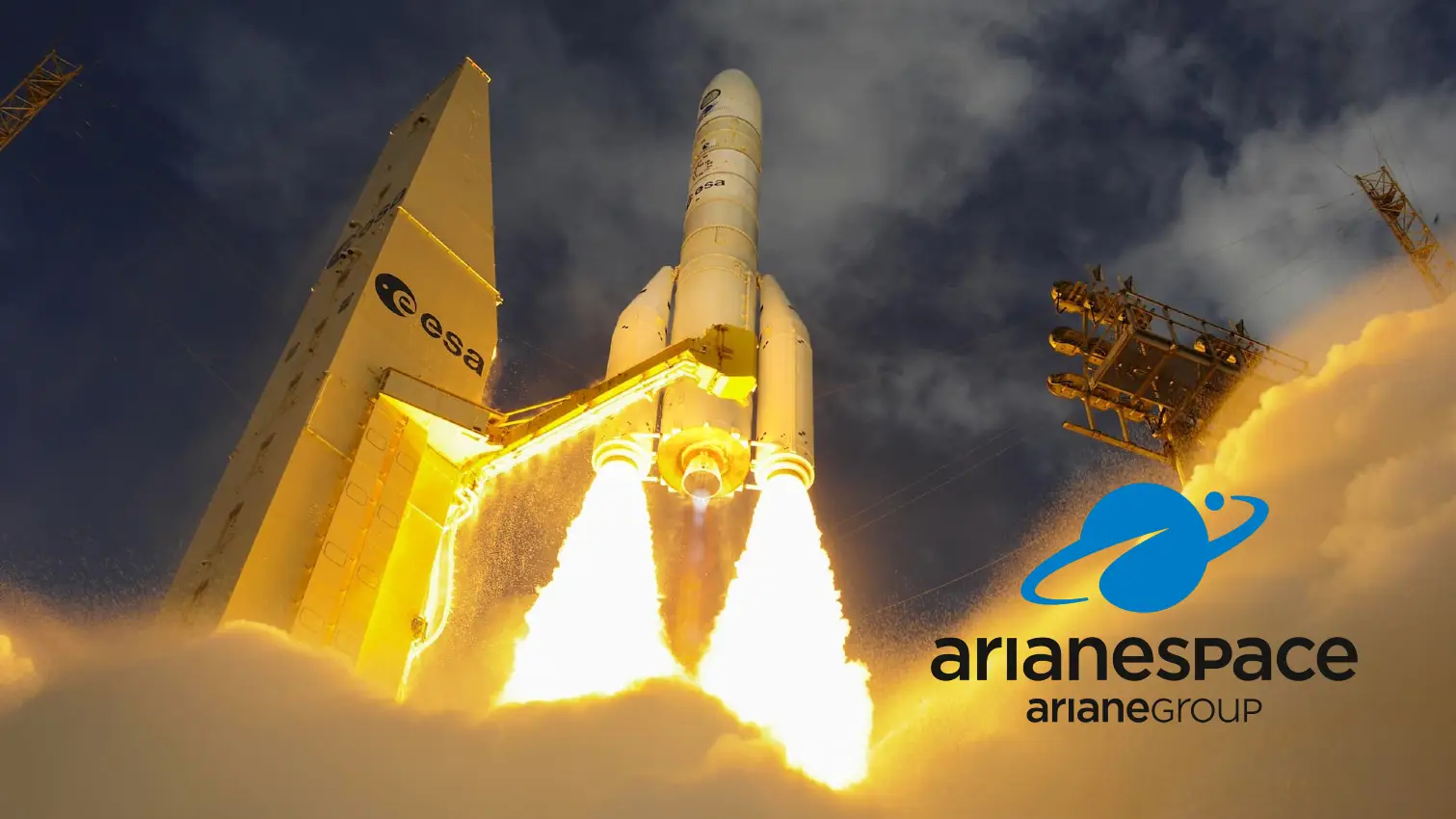
All of this is for naught if there is no way to get the hardware up and running, and Eutelsat has that one covered as well. The company has booked two dedicated Ariane 64 flights in 2027 and 2028, both lifting off from the European Spaceport in French Guiana. The addition of Arianespace to Eutelsat’s launch provider mix gives the company dedicated launch opportunities for the OneWeb replenishment satellites, rather than relying only on rideshare missions. The contracts add another launch provider to the mix as Eutelsat begins ferrying replenishment hardware into orbit, giving the operator a defined schedule for two deployments within the current replenishment program.
CEO Jean-François Fallacher pointed to the new satellites and the launch contracts together as part of Eutelsat’s broader OneWeb and LEO roadmap. Speaking at World Satellite Business Week in Paris, he said Eutelsat expects roughly 1,300 OneWeb satellites flying by 2030, with some replacing current satellites and some strengthening the constellation and adding capacity. He cited the upcoming deliveries from the existing 440-satellite order as evidence that the replenishment pipeline is moving forward, with the 229 additional satellites adding to that effort while IRIS² brings significant new capacity and capabilities. Fallacher also said the fleet would later transition through newer generations, with customers gradually moving from Generation 1 and then Generation 1.5 toward the commercial portion of the IRIS² network as it becomes operational.
Why OneWeb Needs a Refresh in the First Place
OneWeb’s current constellation isn’t small to begin with. There are more than 600 satellites in orbit in 12 synchronized orbital planes at approximately 1,200 km, providing high-speed, low-latency connectivity to customers across a range of markets. The network was initially completed in 2023, and the last OneWeb launch added 20 satellites in October 2024. Eutelsat is now moving through a replenishment program as earlier batches approach the end of their operational life, with newer satellites intended to progressively replace them and preserve operational continuity for customers. The broader plan is not simply to maintain the existing fleet, however, as Eutelsat expects the constellation to continue adding capacity as new generations enter service.
 Credit: Eutelsat
Aviation is one sector served by OneWeb, and the need for continuity is reflected in the number of connectivity products already built around the network. OneWeb is being used by partners such as SES and Panasonic Avionics in their multi-orbit inflight connectivity solutions for airlines; Hughes Network Systems is working on both LEO-specific and combined LEO/GEO inflight connectivity for airlines, while Gogo uses OneWeb to power its Galileo inflight connectivity offering in business aviation. Fallacher has described a gradual migration from the original Generation 1 satellites toward newer generations as the network evolves, while IRIS² is expected to begin delivering operational connectivity services from 2029 onward. He has also said that the full 66-plus-264 LEO IRIS² fleet is expected to be flying by 2032, when the migration toward the next generation of the network is expected to accelerate.
The IRIS² Piece Everyone’s Watching
Alongside the OneWeb work, Eutelsat also locked in its role in building out the LEO segment of Europe’s IRIS² constellation, and the industrial picture has become much clearer. Belgium’s Aerospacelab landed the prime contractor role for 264 satellite platforms under a €2.4 billion contract, while Airbus separately picked up a contract to build 66 LEO Ka-band satellites. Those 66 satellites are described as the sovereign pillar of the program because they will support military Ka-band connectivity for future European users. Thales Alenia Space, meanwhile, is supplying government payloads across all 330 of those LEO satellites under a roughly €500 million tranche that is part of a larger Thales contract expected to exceed €3 billion once the full IRIS² order is counted. The 264 Aerospacelab satellites are planned as dual Ku/Ka-band platforms, while the Airbus batch is dedicated to the military Ka-band layer.
That LEO buildout complements the MEO side of the program, where SES already tapped OHB to build 18 medium Earth orbit satellites for close to €1 billion, rounding out the industrial coalition behind SpaceRISE, the consortium of SES, Eutelsat, and Hispasat responsible for delivering IRIS² as a whole. In August, the European Commission concluded negotiations with SpaceRISE and moved IRIS² from planning to full-scale deployment; as part of that agreement, a further 66 LEO satellites were added, bringing the main constellation to 348 satellites. The 348 satellites will also feature optical inter-satellite links, with additional optional elements potentially supporting specific missions. Aerospacelab CEO Benoît Deper called the selection a defining moment for European space manufacturing, while the company is completing its Megafactory in Belgium after raising $110 million in a Series B round. The selection reflects a broader move toward using newer European manufacturers alongside established aerospace companies, with IRIS² becoming a major test of the continent’s ability to build large-scale satellite infrastructure.