
Can LEO Constellations Replace Traditional GEO Military Satellites?
Jun 25, 2026
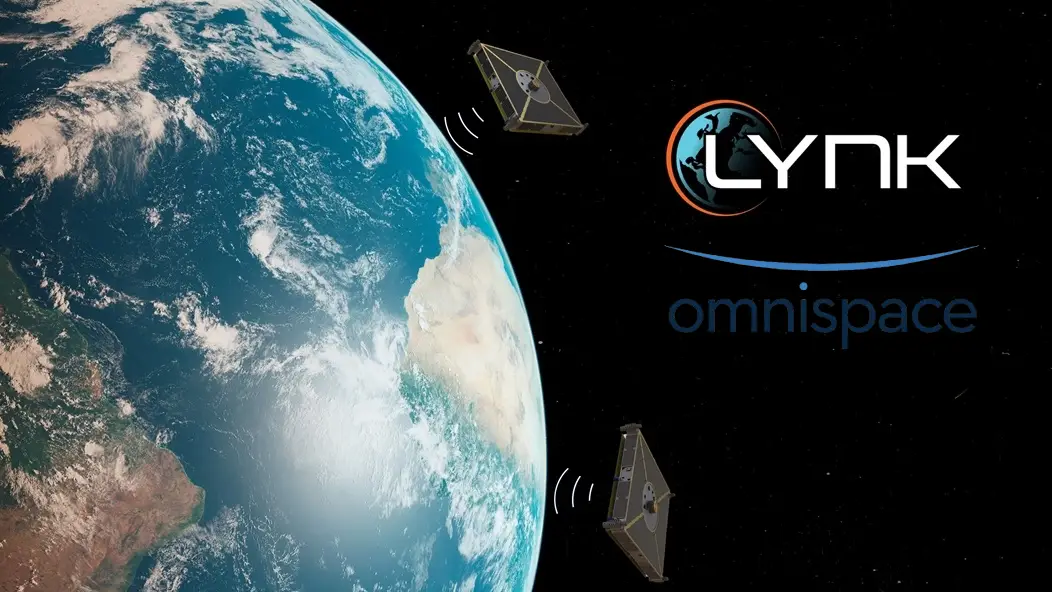
The U.S. military has been using dedicated ultra-high-frequency communications satellites in geostationary orbit for decades to provide secure tactical communications to field assets on land, sea, and air. But new technologies and changing strategic needs have led the DoD to consider whether these vital communications services can be provided more efficiently by smaller satellites that are much closer to the Earth. This paradigm shift represents a larger military strategy to adopt distributed, resilient space architectures that focus on speed, flexibility, and reduced vulnerability in contested environments.
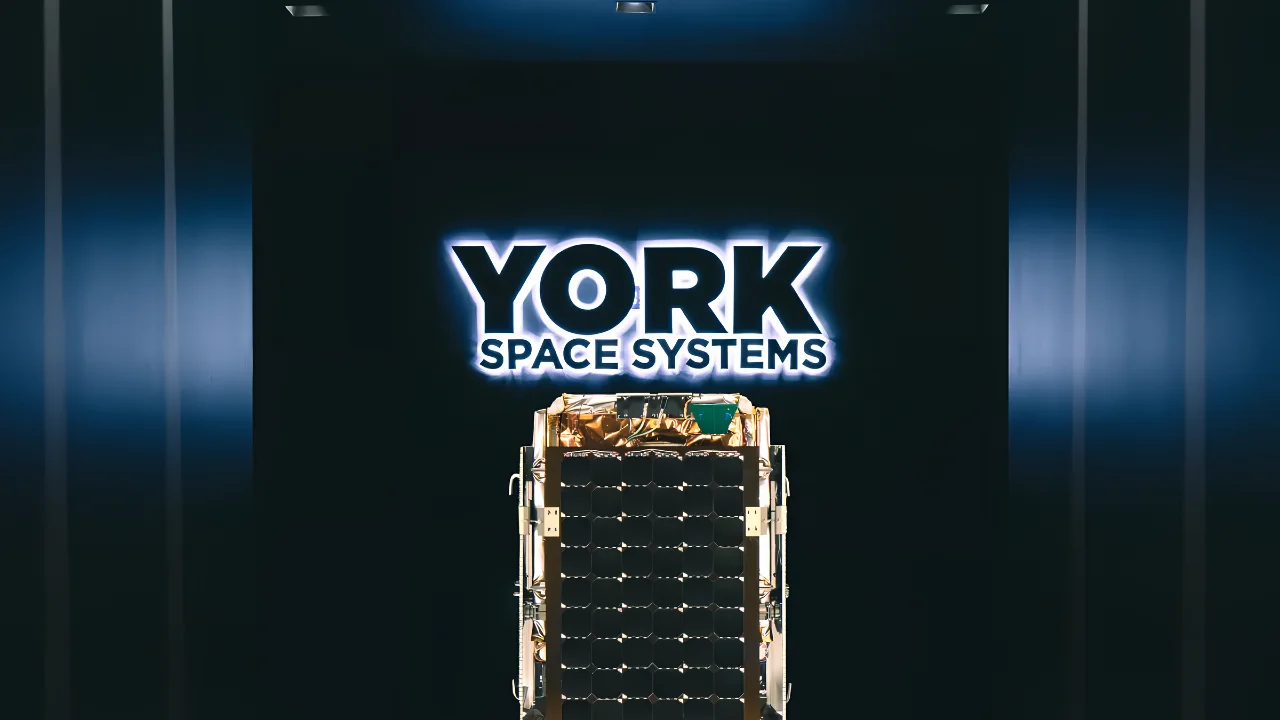 York Space Systems promo. Credit: York Space Systems
The change from the traditional geostationary systems to low Earth orbit constellations is a big departure from past decades. UHF communications are suitable for mobile users who have relatively small antennas, and the signals can penetrate through difficult areas of foliage or urban obstructions. The military has relied solely on dedicated UHF satellites in geostationary orbit for these essential functions, but new threats and technologies have made it possible to explore the feasibility of a smaller, denser constellation of satellites in lower orbits for comparable or better performance, with greater resilience and flexibility. LEO satellites provide a constellation architecture that offers inherent redundancy, lower deployment expense, and reduced signal latency, which are especially important for modern warfighting operations that require real-time responsiveness and system survivability in an adversarial environment.
York’s Dragoon Mission Validates LEO Communications
York Space Systems has been running a full suite of demonstrations as part of its Dragoon mission, which was initiated a year ago under a contract with the Space Development Agency (SDA) within the Proliferated Warfighter Space Architecture program. The company said Dragoon has successfully demonstrated its spacecraft’s ability to send data to a fixed government ground terminal and receive data from the ground back up to the satellite in five demonstrations over a three-month period. The tests were the first in-orbit validation of York’s larger LX-class spacecraft platform for UHF communications payloads, which typically demand high power generation and antenna resources, and were an early but crucial test of the platform’s capabilities.
 York Space Systems promo. Credit: York Space Systems
Two-way connectivity between a satellite and ground forces is operationally critical, and the successful completion of this demonstration on orbit proved the company’s ability to provide operationally relevant tactical communications at speed and scale. The company said the capability to communicate both ways through a multi-satellite low Earth orbit constellation is a significant capability addition to its mission set portfolio. The mission had been built on an inventory spacecraft platform and was delivered to orbit in only seven months, a feat that illustrates York’s ability to quickly respond to new defense requirements while maintaining a high level of spacecraft performance. The quick deployment capability puts York in a key role in the military’s shift to agile and responsive space operations.
Military Strategy for Future Tactical Communications
Meanwhile, the rest of the military space establishment is considering several strategies for modernizing tactical communications infrastructure, alongside York’s Dragoon demonstrations. The Space Force chose Boeing to extend the life of its Mobile User Objective System, giving the company $2 billion to construct two satellites to keep the constellation in orbit until 2035, five years beyond its expected lifespan. Space Systems Command announcements say the spacecraft will launch no sooner than 2031 and 2032. In the meantime, the Space Force has been developing a full plan for the future of narrowband satellite communications, which involves a proliferated constellation of lower-cost satellites in medium Earth orbit below the geostationary band where existing satellites operate.
 York Space Systems promo. Credit: York Space Systems
In a request for information, the Service said it was seeking capabilities that could be delivered by 2031, and in budget documents, the Space Force appears to be planning to launch a prototype satellite in fiscal year 2030. The documents suggest that the service is thinking ahead to future needs as part of its plans to deploy a hybrid satellite communications system that will incorporate both commercial and military services. The Space Force commander overseeing the life-extension effort for MUOS said the service has finished initial narrowband architecture studies and is now in the process of developing an acquisition strategy. In addition to these programs, the Space Force is actively exploring the possibility of using satellites in low Earth orbit to provide UHF connectivity. York’s Dragoon mission is a key stepping stone in the development of future Space Development Agency missions.
York Expands Capabilities Through Strategic Acquisition
York Space Systems has emerged as a leading supplier of these new critical capabilities by making strategic investments in inventory spacecraft platforms and tactical acquisitions to broaden its technical portfolio. The company said it will continue demonstrating Dragoon to investigate other capability sets beyond the initial goals. A company spokesman said the firm is considering demonstrating other resilient tactical communications capabilities, but did not provide any details at this time. York entered into a definitive agreement to acquire ALL.SPACE, a UK-based provider of advanced satellite communications terminals and multi-network connectivity solutions, complementing its existing satellite development capabilities. The proposed acquisition of ALL.SPACE represents York’s second strategic acquisition since its initial public offering and reflects the company’s commitment to building a complete communications ecosystem capable of operating in contested environments across commercial and government networks.
ALL.SPACE, founded in 2019 and headquartered in the United Kingdom with operations in Europe and the United States, developed high-performance software-defined terminal technology to enable simultaneous multi-link, multi-orbit, and multi-band connectivity across various orbital regimes. This advanced terminal technology represents a significant breakthrough in modern resilient communications, offering exceptional flexibility to adapt to changing mission requirements and complex operational environments without requiring expensive specialized hardware modifications. York’s leadership stated that the addition of ALL.SPACE brings a world-class team whose proven leadership and technical excellence will be key as the company scales these capabilities for its customers. The acquisition is expected to close in the third quarter of 2026 and will position York to deliver turnkey on-the-move connectivity solutions that maintain communications across multiple simultaneous pathways, directly supporting the military’s shift toward distributed, resilient space architectures that prioritize rapid capability deployment and operational effectiveness in modern contested environments.