
Is Truly Censorship-Resistant Communication Within Reach?
Mar 20, 2026
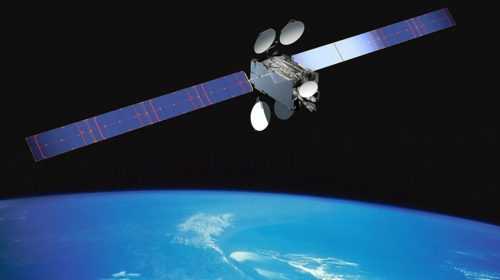
Spacecoin, the pioneer of decentralized satellite internet, and the Midnight Foundation have announced a partnership to develop a peer-to-peer messaging platform that operates entirely beyond the reach of terrestrial censorship, surveillance, and infrastructure shutdowns. By weaving together decentralized hardware and zero-knowledge cryptography, the two organizations are targeting the three most persistent threats to modern digital communication — and doing it from low-Earth orbit.
 Spacecoin and Midnight Foundation promo. Credit: Spacecoin
The timing is no accident. In November 2025, Spacecoin launched three more satellites from Vandenberg Space Force Base, which expanded its CTC-1 constellation and brought the network one step closer to achieving real-time intersatellite communications. That milestone paved the way for a much more ambitious project: a full-stack privacy infrastructure that makes secure communication not a feature of the application, but a feature of the network itself. From Uganda’s election-season blackouts to Iran’s near-total suppression of the internet during civil unrest, the fragility of centralized connectivity has been clearer than ever – and the need for something harder to kill has never been more pressing.
Existing encrypted messaging tools, for all their popularity, have structural weaknesses that the Spacecoin-Midnight stack is meant to avoid. WhatsApp, used by more than three billion people, encrypts message content but still collects behavioral metadata – who communicates with whom, how often, and when. Telegram defaults to unencrypted conversations, and has a history of cooperating with government data requests. Signal, which is widely regarded as the gold standard, still requires a phone number at the point of registration, which creates a persistent thread between digital identity and real-world existence. Former NSA General Counsel Stewart Baker once noted that metadata alone can reveal everything about a person’s life — making the content of their messages almost beside the point. It’s a remark that has aged into more of a warning than a footnote.
The proposed platform addresses these gaps in every layer of the communication chain. Spacecoin’s network of low-earth orbit satellites provides permissionless connectivity that ignores terrestrial ISPs altogether, and smart contracts on the Spacecoin blockchain distribute network coordination in a way that removes the possibility of a single point of control. Midnight contributes programmable, cryptographic privacy by means of zero-knowledge proofs, which allow users to prove that they are authorized to communicate without revealing their identity, physical location, or behavioral patterns. Fahmi Syed, President of the Midnight Foundation, has argued that there cannot be true privacy when the infrastructure behind the scenes is still open to abuse – and the idea of the partnership is to extend the cryptographic protection all the way down to the connectivity layer itself. Tae Oh, Founder of Spacecoin, has put the ambition on a much wider footing, suggesting that a stack that can protect a message is just as capable of protecting a financial transaction or a medical consultation.
The implications go far beyond private chat. If the infrastructure works as envisioned, the same architecture could be used to support private healthcare delivery in areas where connectivity is limited or surveilled, to provide secure channels for coordination among journalists and activists operating in hostile environments, to settle financial transactions invisibly to local surveillance regimes, and to decentralize social platforms that allow users to actually own their own data. The project is being developed as an open-source, auditable system – one that, by design, makes no trust assumptions on the part of the users. For the increasing proportion of the world’s population living under governments that regard communication infrastructure as a tool of control, that commitment may be as important as the cryptography itself.