
Who Can Fill the Falcon 9 Gap?
Oct 12, 2026
Over the last three years, an average of 270 orbital launches have taken place each year, more than triple the pace of a decade ago. Prices are competitive, flights are frequent, and getting hardware to orbit has rarely been faster. Strangely enough, availability is getting tighter anyway. Caleb Henry, who directs research at Quilty Space, talks with satellite operators all the time, and he described what he keeps hearing as an industry in panic. His firm has even charted a change in the conversation, away from how many launch companies the US market can support and toward who can execute fastest. The complaint keeps getting louder, which suggests the squeeze isn’t a passing blip for the companies waiting in line.
 Credit: Google
Telesat has fielded requests from other companies hoping to share some of the 11 Falcon 9 launches it booked for its new constellation, and the answer was a polite no. Amazon LEO has had to slow satellite production because few of the dozens of launches it reserved five years ago are actually ready. AST SpaceMobile told investors on a recent earnings call that launch availability is now the pacing item for its constellation. Demand forecasts only add pressure, with the Commercial Space Federation expecting thousands of satellite launches a year in less than a decade and Analysys Mason projecting more than 37,000 satellites to launch between 2023 and 2033. Henry sees reasons to believe things may get even worse over the next two to four years.
Why Falcon 9 Is Slowly Stepping Aside
The biggest worry right now is SpaceX itself. The company is largely responsible for the jump in launch availability during the 2020s, and it has signaled that it wants to wind down Falcon 9 as fast as it can in favor of the much larger Starship. On paper that sounds fine, since Starship carries far more. The concern is that SpaceX will mostly fly its own hardware, meaning next-gen versions of its broadband satellites and orbital data centers, because those promise far bigger profits. The satellite dispenser on Starship is tuned for the company’s own spacecraft, which hints at the priorities. Without SpaceX, the Western market would have been in serious trouble over the last five years, which makes the shift an awkward one for everybody else.
SpaceX booked $4.3 billion of its $7.8 billion second-quarter revenue from its own satellite broadband business, while space services made up less than 12 percent, and commercial launch is only a slice of that. Falcon 9 flew 165 times last year and will probably manage about 20 fewer missions this year, with ground systems already being adjusted to match. SpaceX president Gwynne Shotwell has said the rocket’s operational life may end in 2030 or 2032. Customers have recently struggled to buy a launch after 2028, and one source says SpaceX told the US government it plans to end commercial launches after that year while keeping a limited number of federal missions going. Whichever dates stick, commercial operators now know they can’t reliably plan around the workhorse rocket.
Rivals Are Still Not Ready
The loss of access to Russian launch services in 2022 narrowed the options for Western customers. OneWeb, which had satellites already in Soyuz launch processing, ultimately turned to SpaceX to finish its constellation. At the same moment Europe was moving from Ariane 5 to Ariane 6 and United Launch Alliance from Atlas V to Vulcan, and neither replacement was close to flying. Japan’s H3 and India’s LVM3 haven’t become commercial answers either, each flying only a handful of times a year or less. Rocket Lab’s Electron, meanwhile, has become a reliable option for dedicated small-satellite launches, but its payload class is too small to take over Falcon 9’s role in larger constellation deployments. Only SpaceX stepped up at scale, and by perfecting first-stage reuse, the company ended up backstopping everything from Galileo satellites to NASA astronauts. Falcon launches went from 31 in 2021 to 91 in 2023.
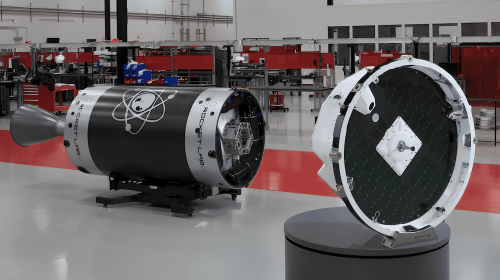
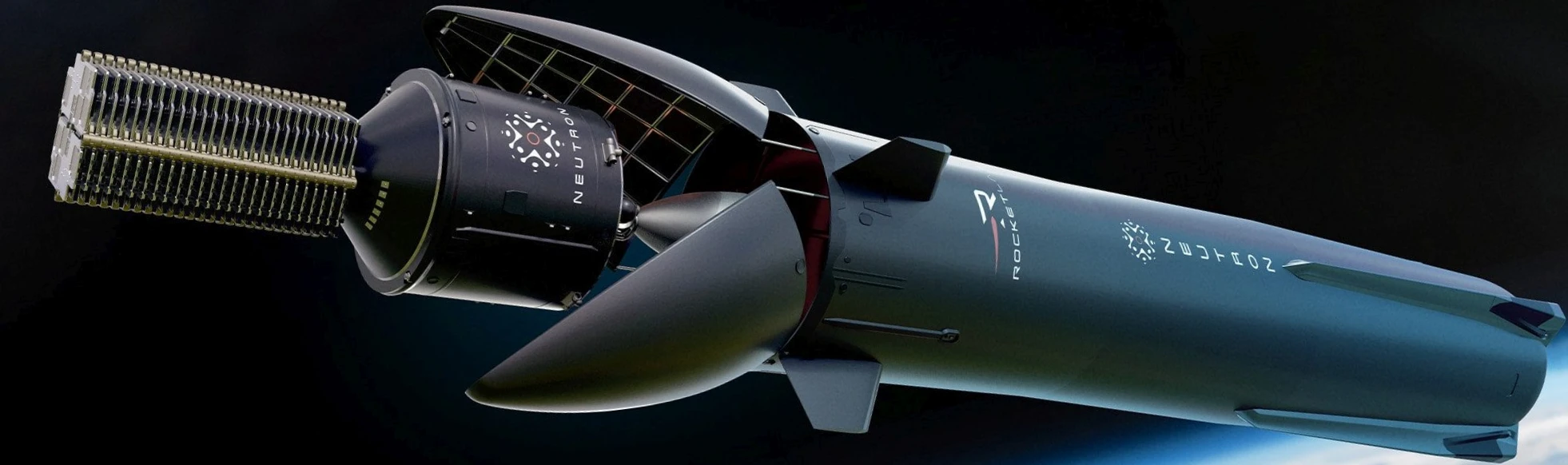 Rocket Lab’s Neutron. Credit: Rocket Lab
The new heavy rockets haven’t closed the gap. Amazon alone bought 38 Vulcan launches and options for up to 27 New Glenn flights, so both rockets had more missions than they could fly for a while. Vulcan has flown just two military missions in the six years since the Space Force award, held back by solid booster problems, and the Pentagon has already moved some payloads to Falcon 9. New Glenn looked promising after landing a booster in November 2025, but a hot-fire anomaly in May 2026 damaged key launch infrastructure, including the lightning tower and transporter-erector. Blue Origin says it aims to return to flight before the end of 2026, although the schedule remains uncertain. Ariane 6 has a good record, but a goal of ten vehicles a year won’t make a real dent in global demand. So after nearly five years the market still leans on Falcon 9.
A Slow Road to Balance
A new class of US medium-lift rockets is coming, though not quickly. Stoke Space’s Nova could carry up to 7 tons and might fly in the first half of 2027 if things go well, while Rocket Lab’s Neutron lifts 13 metric tons in reusable form and 15 expendable, with a 2027 debut looking plausible but not guaranteed after several slips. Relativity’s Terran R, rated for 23.5 tons reusable, could debut within a year, though a rocket that big may see more delays. The Firefly and Northrop Grumman Eclipse, at 16 tons, will likely arrive later still. None of these companies has much experience with medium-lift growing pains, so scaling beyond a handful of launches a year will take time. Devon Papandrew of Stoke thinks that even if all four succeed, relief won’t come right away, and he expects 2028 to be when the problem turns truly acute.
Government intervention, from forcing a sale of Falcon 9 infrastructure to nationalizing SpaceX, gets discussed, but experts don’t expect it, partly because the engineers who make the system work would likely walk away. Scott Pace of George Washington University said any effort to keep Falcon 9 flying would have to work for both sides. Pace and other experts say the government could act sooner by adding spaceports and signing technology safeguards agreements with nations like Japan. Henry expects new vehicles to arrive slowly and incumbents to ramp up steadily, with some balance returning only in the 2030s. Some companies are attacking the problem from the payload side instead. Meridian Space, which recently separated from SpinLaunch, is developing flat broadband satellites that it says could allow as many as 250 spacecraft to be deployed on a single dedicated launch. Kongsberg NanoAvionics is building the initial batch, and Meridian has already activated its first communications payload in orbit following a launch on October 1. Satellite deliveries for its Meridian Express offering are expected to begin in 2027. Until capacity catches up, anyone planning a deployment should expect to wait.