
Deals Signal Shift to Sovereign GEO Operations
Sep 20, 2026
Astroscale has spent September rolling out a string of announcements that, taken together, paint a picture of a company pushing hard on multiple fronts at once. Over the course of the month, the Japan-headquartered on-orbit servicing specialist unveiled a sovereign GEO inspection platform with a French defense manufacturer, a modular satellite-servicing architecture with a Danish smallsat builder, and a launch contract for what could become the world’s first mission to capture and remove an existing piece of large orbital debris. Add in a fresh France 2030-backed contract involving Exotrail and Eutelsat, and the picture that emerges is a company seeking to demonstrate and commercialize its technology across multiple orbital environments, not just the one where it first made its name.
 Credit: Astroscale
That breadth matters because Astroscale’s original claim to fame, the ADRAS-J inspection mission back in 2024, was narrowly scoped by design, showing the company could approach and photograph a piece of debris without touching it. Everything announced this September builds on that foundation but pushes into new territory, from defense-oriented GEO inspection to actual physical capture of uncooperative hardware. Astroscale France and French satellite manufacturer HEMERIA announced a partnership to co-develop a microsatellite platform purpose-built for operations 36,000 kilometers up in geostationary orbit, the orbit where critical defense communications, early-warning, and national security assets operate. HEMERIA is contributing a satellite bus derived from its existing YODA defense platform, while Astroscale brings the rendezvous and proximity operations software and sensor packages it proved out during ADRAS-J. Pairing an established bus with flight-tested inspection technology is meant to cut both cost and development time compared to legacy heavy-class GEO defense platforms.
Building a French Foothold in Geostationary Orbit
The partnership comes down to a simple tracking constraint. Ground-based radar and optical sensors have physical resolution limits at GEO distances, which is why defense operators need in-orbit inspection capabilities to evaluate nearby objects and satellite conditions. Astroscale France president Philippe Blatt described geostationary orbit as infrastructure that underpins everyday life and national security, and said the combination of HEMERIA’s manufacturing heritage with Astroscale’s proximity-operations expertise will provide France and its allies with a faster, more cost effective path to sovereign inspection capability. HEMERIA chairman Nicolas Multan seconded that, noting that GEO was becoming an increasingly strategic and contested environment, with a growing need for sovereign, agile and operational capabilities.
The first engineering activities will happen at HEMERIA’s clean room in Toulouse, with the dual-use platform set to be offered to the French Space Command, European defense agencies, and allied international nations. The partnership is aimed at customers seeking sovereign orbital inspection hardware. GEO is becoming an increasingly strategic and contested environment, and combining an established bus with proven RPO software and sensors is specifically aimed at shortening development cycles compared with legacy heavy-class GEO defense platforms.
A Servicing Architecture Built Into Satellites From the Start
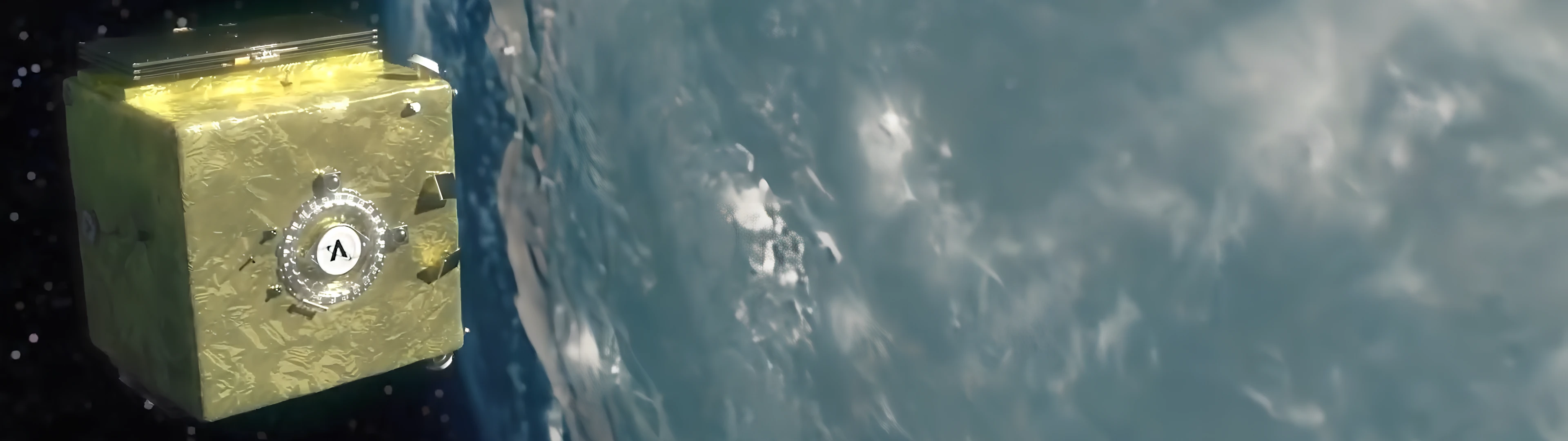
Space Inventor and Astroscale Japan took a noticeably different tack with this one, skipping past any single mission and going straight for infrastructure other satellite makers could just build in from day one. Space Inventor brings its modular smallsat platforms to the table, Astroscale brings docking and grappling hardware it’s already proven in orbit, and together they land on compatible interfaces manufacturers can bake into production runs rather than bolting on after the fact. The mechanics work like this: docking plates on the host satellite connect with Astroscale’s robotic grappling mechanisms, and power plus data lines running through Space Inventor’s avionics stack give a servicing vehicle the ability to run diagnostics, hand off backup power, or nudge a target satellite’s orbit once it’s locked on. The teams will continue ground-segment validation and functional testing of the docking and power interfaces.
 Credit: Astroscale
Strip away the engineering and the business case is almost embarrassingly simple. Right now, a satellite is typically decommissioned once it runs out of propellant or a key subsystem fails, and operators are stuck paying for a full replacement rather than fixing what’s already up there. Give satellites standardized servicing interfaces instead, and suddenly operators can stretch a satellite’s working life, bolt on hardware upgrades, or push back an expensive replacement launch. It also solves a debris problem nobody talks about enough. The same hardware that lets you repair a satellite also lets you safely relocate a disabled spacecraft or otherwise address orbital-debris risks. Both companies plan to fold the technology into customer satellite buses on the way to an eventual in-orbit demonstration.
The Mission That Actually Grabs the Debris
Where the France and Denmark partnerships are about building capability, ADRAS-J2 is about proving it. Astroscale Japan selected Isar Aerospace to launch the mission on the German company’s Spectrum launch vehicle from Andøya Space in Norway, targeting a planned launch sometime in Japan’s 2027 fiscal year. Unlike its predecessor, which only inspected a piece of debris from a distance, ADRAS-J2 is intended to become the world’s first mission to capture and remove an existing piece of large orbital debris, targeting an 11-meter, roughly 3-ton uncooperative rocket upper stage using an in-house robotic arm. The mission builds directly on lessons from ADRAS-J’s 2024 flight, during which Astroscale became the first commercial company to conduct close-proximity inspection of an existing large debris object.
That earlier flight closed to within just 15 meters of its target and confirmed that the object’s payload attach fitting, the exact interface ADRAS-J2 will use to grab it, showed no significant damage. Astroscale founder and CEO Nobu Okada called the follow-up mission a pioneering step toward addressing decades of accumulated legacy debris, adding that its success could help shape international standards, policy frameworks, and dialogue around active debris removal going forward. Isar Aerospace chief commercial officer Stella Guillen said the mission plays to exactly what her company’s Spectrum vehicle was built for, precision and flexibility in reaching a specific orbital slot, calling it a deepening of a partnership that started with an earlier launch agreement. The mission runs as Phase II of a JAXA-backed debris removal program, with the spacecraft currently in assembly ahead of launch.