
Can Ex-SpaceX Engineers Break Starlink's Grip?
Jul 20, 2026
A group of former SpaceX engineers has stepped out of stealth mode with a company called Eclipse Space, and their ambition is nothing less than reshaping who gets to own a satellite megaconstellation. The venture is led by Derek Huerta, who spent years at SpaceX as a senior manager overseeing satellite payload engineering before deciding to strike out on his own. He is joined by a small circle of fellow SpaceX veterans, including former business development leader Barry Matsumori, former Starlink development lead Celena Byers, and supply chain specialist Dante Tay. Kyle Leveque, who previously helped build Astro Digital and Cambrian Works, rounds out the founding team as co-founder.
 Credit: Eclipse Space
Huerta explained in comments to reporters that a personal windfall from the SpaceX Nasdaq listing earlier this year helped fund his own stake in Eclipse, though he made clear the company is not simply a passion project bankrolled out of pocket. He noted that outside investors, among them Space Capital, Tectonic Ventures, and Ubiquity Ventures, had already committed capital to the effort, giving Eclipse enough resources to move forward with its 2026 hardware deliveries and its planned 2027 demonstration mission. He added that the company was not yet ready to disclose exact funding figures, though he indicated that more details would surface in the months ahead. The company was quietly founded roughly a year before its public unveiling, operating out of Redmond, Washington, a location chosen deliberately because it sits close to the same production facility where Starlink satellites are built.
Why Eclipse Believes the Market Needs a New Approach
According to Huerta, the years he and his colleagues spent building Starlink gave them a front row seat to a looming problem in the satellite industry. He observed that the world appeared to be drifting toward a future dominated by a small handful of massive networks, each controlled by a few corporations or governments, leaving most of the planet with no option but to rent bandwidth on someone else’s terms. He described this dynamic as unacceptable given how essential satellite infrastructure has become, comparing it to a power grid or a telecommunications network that no country would ever want to lease from a foreign power. In his view, most nations have historically faced only two paths toward space capability, either paying an enormous sum to build everything independently or accepting dependency on outside operators, and neither option struck him as sustainable for a rapidly digitizing world.
Huerta also said that the only viable alternative that countries have been able to find to the American or European commercial space ecosystem is China, and that is exactly the space that Eclipse wants to fill. He warned that the United States could lose some of its influence in orbit unless it provides smaller nations with a viable way to own their own infrastructure and his firm is part of the solution to that strategic imbalance. Eclipse, on the other hand, will be a fabless company, meaning that it will design the satellites but have them built by outside manufacturers, as Apple does with iPhones, Huerta said. He said vertical integration was appropriate for SpaceX’s problem of rapidly scaling a single network, but that it was not the right model for a future where dozens of governments and companies would each want a constellation that meets their needs.
Building the Team and the Technology
Around half of the 30 people who work at Eclipse came from Starlink, and Huerta noted that thirteen of them had been there during the program’s early years, when it was still called Satellite Development. He said this team had been responsible for the initial work on Starlink’s phased array technology and helped establish the manufacturing process that eventually enabled SpaceX to produce dozens of Starlink satellites per week. In addition to the antennas, he said the same group had worked on the power systems, onboard software, modems, and other production processes that enabled Falcon 9 to launch so frequently. He said that taken together, the founding group had taken almost every subsystem in a modern megaconstellation from an early concept sketch to mass production.
 Eclipse Space logo. Credit: Eclipse Space
In a bid to gain a competitive advantage in engineering speed, Eclipse also announced a strategic acquisition, bringing in the engineering team behind the Agent Studio platform from Rendered.ai, and an exclusive license to continue developing the software, with the option to eventually acquire the underlying technology outright. Most companies using AI in hardware engineering would be doing it in a very limited way, mostly to help software engineers write code, but Eclipse wanted to apply the tools directly to the much more difficult problem of designing spacecraft, Huerta explained. The new AI specialists work in parallel with Eclipse’s satellite, mechanical, electrical and radio frequency engineers, with the common objective of reducing the time required to design, customize and optimize large scale space systems. This approach of embedding AI deeply into engineering workflows, he proposed, will be expanded into other areas, such as future orbital data centers.
What Eclipse Plans to Deliver and When
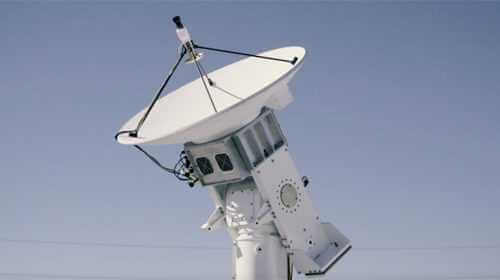
Eclipse intends to deliver its first pieces of customer hardware later this year, starting with a prototype phased array antenna and a telemetry, tracking, and command radio system, both of which are meant to pave the way toward a fully integrated demonstration spacecraft targeted for 2027. That demonstration satellite will rely on a lightweight bus weighing under one hundred kilograms and will carry two instruments built in house, a total ionizing dose sensor designed to measure the radiation environment in orbit and a Langmuir probe intended to characterize the surrounding plasma conditions. Although this early demonstrator will not include the phased array that Eclipse eventually plans to fly on its operational satellites, the company described it as a necessary step toward validating the underlying bus technology before scaling up to what Huerta referred to as a Starlink class spacecraft.
Once Eclipse reaches that operational stage, Huerta said the satellites are expected to feature dual S band phased arrays, E band backhaul links, V band inter satellite communication, and roughly eight kilowatts of onboard power, with more than twenty units designed to stack together inside a single Falcon 9 launch. He indicated that the company chose to begin with direct to device services specifically because solving that particularly difficult engineering challenge would force Eclipse to build core technologies applicable to broader markets later on, including standard broadband connectivity. Company materials also claim the fabless production model can support a minimum output of five satellites per day once fully scaled, with in country manufacturing lines set up individually for each sovereign customer to satisfy local production requirements. At launch, Eclipse reported active discussions with prospective government customers across Europe, Asia, and the Middle East, alongside multiple commercial partners in the telecom and connectivity sectors, suggesting the company already has a meaningful pipeline before its first satellite has even reached orbit.