
Compact, Resilient and Built for Contested Operational Environments
Jun 01, 2026
US-based satellite terminal manufacturer Kymeta Corporation has announced the launch of its latest flat panel SATCOM antenna, the Kestrel u5. Positioned as the smallest and most capable multi-orbit terminal in its class, the new product targets the unmanned systems and national security sectors. The launch comes at a time when defence organisations around the world are under growing pressure to maintain reliable, high-bandwidth communications across increasingly complex and contested operational environments. Modern military doctrines such as Multi Domain Operations demand constant data exchange between units, and conventional radio networks operating on VHF frequencies are simply unable to handle that volume independently. SATCOM has emerged as the key solution to bridge those bandwidth gaps, and the Kestrel u5 represents Kymeta’s most advanced answer to that challenge yet.
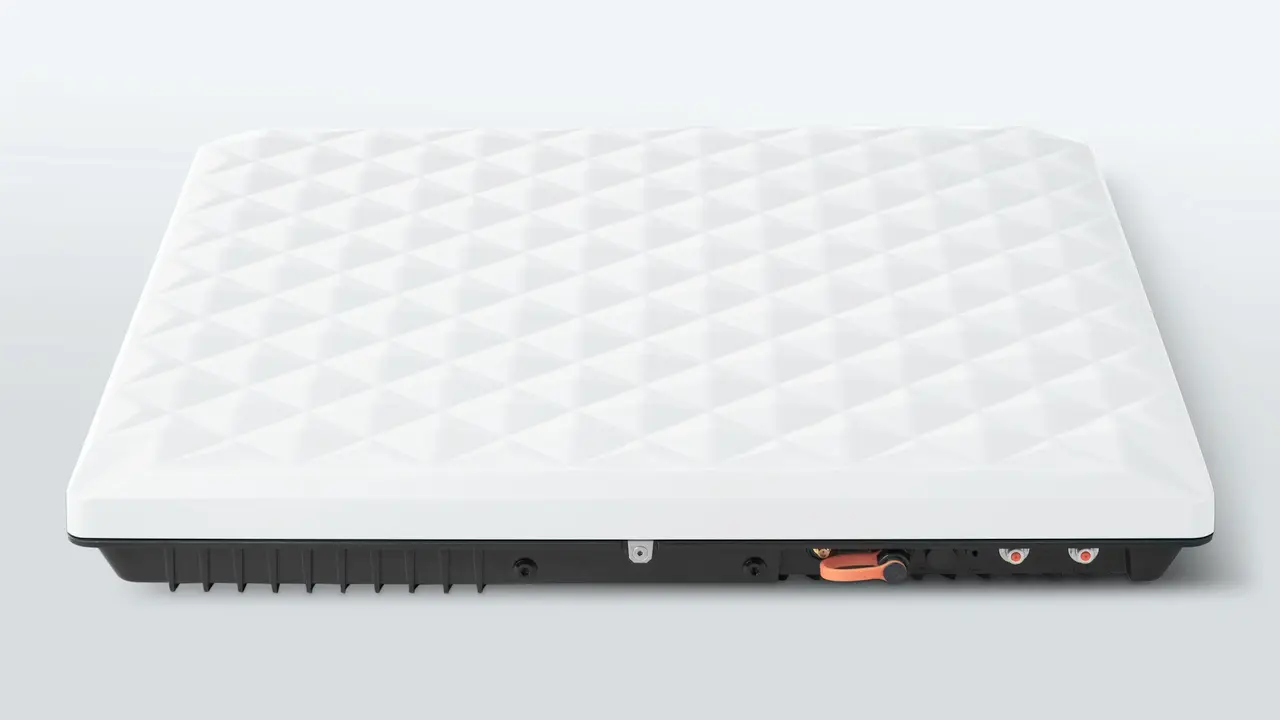 Kestrel u5 FPA. Credit: Kymeta
The Kestrel u5 is multi-orbit capable, meaning it can seamlessly integrate with low earth orbit, geostationary orbit and highly elliptical (HEO) orbit constellations. This is important because LEO satellites are located from 400 to 1,200 kilometres above the Earth’s surface and provide a strong signal because they are so close, but they are also moving very quickly across the sky, which necessitates an agile antenna. GEO satellites are deployed at an altitude of 36,000 kilometres and offer more stable coverage, but require a much narrower and more concentrated beam to overcome the loss of signal over the distance. The Kestrel u5 is able to deal with both situations using Kymeta’s own electronically steered array based on metamaterials that can switch between beams in less than a millisecond. The smooth handoff between networks and constellations provides commanders with a redundant connectivity plan, meaning that a network failure will not affect mission-critical operations.
The antenna has been specially designed to meet the physical requirements of modern warfare. The flat panel, no-moving-parts design is significantly smaller than older SATCOM systems, measuring just 60 x 60 x 8 centimetres and weighing under 11 kg. The compact and lightweight design is ideal for integration on uncrewed surface vessels, ground vehicles and other next-generation platforms where space and weight are critical. The terminal is rated IP68, fully protected against dust, and can withstand submersion in water, with patent-pending radome technology providing fast water shedding during operation at sea. Its shock-absorbing design also makes it highly durable, which is important in environments with high vibrations or impact loads where equipment integrity is at risk.
One of the key design considerations has been survivability in electronically contested environments. The Kestrel u5 features Low Probability of Detection and Interception characteristics, which help lower the terminal’s electromagnetic and thermal signatures, making it much more difficult to detect or target. The narrow beam created by the metamaterials antenna surface also makes it less susceptible to radio frequency jamming and interference. Typical operation consumes less than 100 watts, with a maximum of 200 watts, and the terminal is passively cooled rather than using active cooling fans, which reduces both the risk of mechanical failure in the field and its overall thermal output. Tom Goebelbecker, Kymeta’s Senior Vice President of National Security Programs, noted that in today’s conflicts, the absence of real-time communications and accurate data can determine the outcome of a critical operation, and that the Kestrel u5 was built specifically to solve that problem.
Beyond ground and naval applications, the Kestrel u5 is also positioned to support the control and coordination of long-range unmanned systems, an area of growing operational importance following the widespread use of drones and uncrewed surface vessels in recent conflicts. The terminal supports full-duplex functionality and is designed to accommodate remote software upgrades, ensuring it can evolve alongside the rapidly shifting technological landscape of modern defence. Production units are expected to become available shortly after the announcement, with broader availability planned as Kymeta scales manufacturing to meet demand. With its combination of multi-orbit flexibility, rugged construction, low observability features, and an exceptionally compact form factor, the Kestrel u5 represents a significant step forward in how distributed military teams connect, command, and operate in contested environments.