
Can Elveo Compete with SpaceX in D2D Connectivity?
Aug 18, 2026
Satellite operators Lynk Global and Omnispace have officially completed their merger, rebranding the combined business as Elveo Mobile. The deal closed on August 17 after clearing all necessary US and foreign regulatory approvals, months after the companies first announced plans to merge back in October.
 Credit: Elveo Mobile
Together, the two businesses bring complementary pieces to the table. Lynk contributed its direct-to-device platform and seven satellites already delivering intermittent messaging and alerts across a handful of island nations, while Omnispace added 60 megahertz of globally coordinated S-band spectrum acquired from bankrupt operator ICO Global. Omnispace had once planned over 600 satellites using that spectrum, but those plans stalled after running into interference tied to SpaceX’s D2D operations in the US. Elveo CEO Ramu Potarazu, who previously ran Lynk, pushed back on the idea that the merger created something new, calling the combined company instead a long established player rebuilding and rewriting how direct-to-device connectivity works.
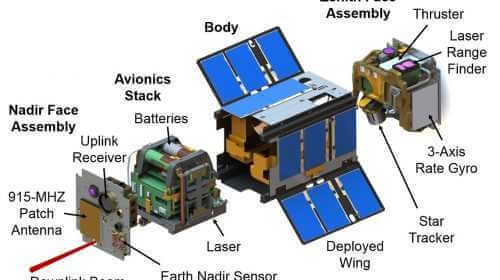
Elveo isn’t starting from zero technically either. The company begins with nine satellites already in orbit, including six of Lynk’s seven LEO satellites alongside two more LEO satellites and one medium Earth orbit satellite from Omnispace. Its longer term target is a constellation of 320 LEO satellites meant to deliver persistent global coverage, with deployment expected to start in the fourth quarter of 2027, the full rollout completing around mid-2028, and commercial services launching by early 2028. Early offerings will lean on narrowband capabilities covering things like SMS, WhatsApp, FaceTime, and mobile banking, with heavier data applications layered in later. Potarazu has been careful to frame Elveo’s business model as complementary rather than competitive toward mobile network operators, insisting the company has no interest in owning the end customer and instead positioning itself closer to a roaming partner.
Spectrum flexibility is central to how Potarazu describes Elveo’s advantage over rivals. He claims the satellites can support multiple waveforms and frequency combinations simultaneously, including terrestrial IMT and midband spectrum alongside Omnispace’s international S-band rights, and says the network can reconfigure itself in real time without needing to swap out hardware in orbit. He also points to backward compatibility across 2G, 4G, 5G, and IoT devices using 3GPP non-terrestrial network standards as something few competitors can match. Beyond connectivity, Elveo is exploring whether the onboard computing power built into its satellites could support other workloads when it isn’t busy managing waveform configuration, though Potarazu was clear the company has no plans to build data centers in orbit.
Luxembourg based operator SES remains one of Elveo’s most significant shareholders, having previously invested in both Lynk and Omnispace before their merger, and the relationship gives Elveo access to SES’s medium and geostationary orbit satellites along with its ground station network. That arrangement lets each Elveo LEO satellite route traffic through an MEO or GEO relay depending on what’s most efficient, cutting down how many satellites and ground stations Elveo needs on its own. Other investors include Fortress, Stepstone, Columbia Capital, Telcom Ventures, and Blazar Ventures. With 56 contracts across more than 60 countries, Elveo still faces the harder task of raising funding and competing against better funded rivals like AST SpaceMobile and Starlink Mobile, both with far more satellites in orbit.