
Can Blue Origin Recover Before Its Customers Look Elsewhere?
May 31, 2026
On the evening of May 28, Blue Origin’s New Glenn rocket was destroyed in a massive explosion at Launch Complex 36 on Cape Canaveral, Florida, during a static-fire test of the rocket’s first stage. All seven BE-4 engines fired, triggering a catastrophic fireball that engulfed the pad and brought down one of the lightning towers. There were no injuries, but the physical damage was extensive. It was the worst explosion at Cape Canaveral since a Falcon 9 was destroyed at Space Launch Complex 40 in September 2016.
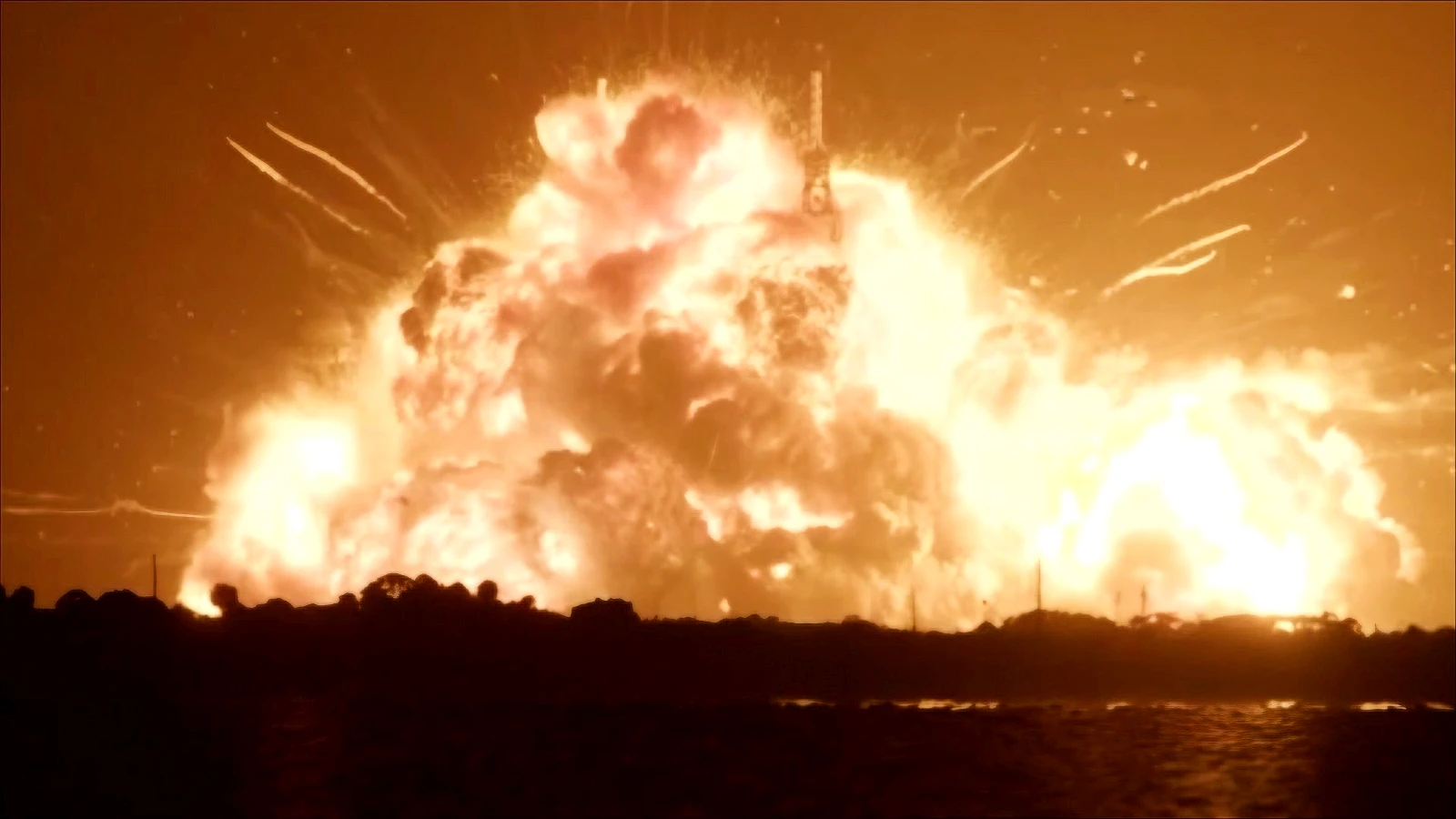 New Glenn rocket explodes during Cape Canaveral test. Credit: Google
Blue Origin responded quickly with public statements. Founder Jeff Bezos admitted the day had been extraordinarily difficult but said he was confident the company would figure out what went wrong and rebuild whatever was necessary to get back to flight. CEO Dave Limp later said that by May 30 the company had regained partial access to the launch complex and was already working on a rebuild plan, adding that the booster and the second stage stored in the integration facility appeared to be in good condition despite the explosion.
This development impacts Blue Origin’s customers significantly. The vehicle had been configured for the NG-4 mission, which was supposed to launch a cluster of Amazon Leo broadband satellites as part of a 24-launch contract to deploy Amazon’s planned 3,200-satellite constellation. A launch date as early as June 4 had been targeted. Amazon confirmed its satellites were not aboard during the test and would remain at its processing facility at Kennedy Space Center, but the company’s constellation deployment plans are now seriously in question. AST SpaceMobile, which is also heavily dependent on New Glenn for its direct-to-device satellite network, had already lost its BlueBird 7 satellite on the NG-3 mission in April due to an upper-stage malfunction. Both companies have stressed multi-provider launch strategies, and Amazon noted that New Glenn accounts for fewer than one quarter of its planned launches, but the disruption remains a significant setback for their schedules.
NASA is also facing complications. The uncrewed Blue Moon Mark 1 lunar lander was originally planned to launch in the fall of 2026 on New Glenn, in a mission recently renamed Moon Base 1. A second lander is planned for 2027 to deliver the VIPER rover, and two additional landers carrying rovers from Astrolab and Lunar Outpost are set to precede the Artemis 4 crewed landing in 2028. Artemis 3 also relies on New Glenn, as it involves docking in low Earth orbit with a prototype of Blue Origin’s Blue Moon Mark 2 crewed lander. NASA Administrator Jared Isaacman said the agency would work with Blue Origin to assess near-term mission impacts and share updates as more information became available.
Despite the explosion, the U.S. Space Force reaffirmed its commitment to Blue Origin. In a notable coincidence, Space Systems Command had issued a task order to Blue Origin just hours before the explosion, awarding the company a National Security Space Launch Phase 3 Lane 1 contract for a National Reconnaissance Office mission set for late 2027 or early 2028. Col. Eric Zarybnisky, who oversees the NSSL program, described the incident as a reminder of how difficult and unforgiving rocket development remains, and confirmed that the program would continue working with Blue Origin to determine the cause and implement corrective measures. The explosion does not fall under FAA jurisdiction, as it occurred during a ground test rather than a licensed launch activity, meaning the investigation will be conducted internally rather than triggering a formal federal inquiry. How long New Glenn remains grounded will depend on the findings of that investigation and the pace of repairs to Launch Complex 36.