
Is Rocket Lab Building a Space Monopoly?
Aug 10, 2026
Rocket Lab Corporation is buying Iridium Communications outright, with the two companies signing a definitive agreement covering every outstanding share of Iridium stock. The math behind the deal puts Iridium’s value at $54.00 per share, which works out to an enterprise value close to $8.0 billion once debt and other adjustments are factored in. Shareholders won’t just get cash either. Each share converts into $27.00 upfront plus a portion of Rocket Lab stock, and that stock portion floats based on a formula tied to Rocket Lab’s own trading price over the ten trading days leading up to closing. A collar keeps that exchange ratio from swinging too wildly, capping the reference price between $67.50 and $112.50 a share so neither side gets blindsided by a sudden market move.
 Credit: Rocket Lab
Paying for the cash side of things required Rocket Lab to arrange serious financing. The company secured a $3.6 billion bridge loan with a 364 day term, and Deutsche Bank along with Wells Fargo have already committed to fund it in full. Whatever the bridge loan doesn’t cover will come from Rocket Lab’s existing cash reserves, supplemented by debt and equity it still needs to line up. Directors on both sides gave unanimous sign off already, but the deal is far from done. Iridium’s own shareholders still have to vote yes, the FCC has to approve transferring Iridium’s licenses, and antitrust regulators need to clear it under Hart-Scott-Rodino before anything closes, which the companies expect sometime around the middle of next year.
The Logic Behind Buying What You Launch
There’s a simpler way to look at this deal than the finance jargon suggests. Rocket Lab has spent its history launching things it didn’t own, building rockets and satellites on contract for whoever was paying, and it never once operated a constellation at meaningful scale on its own. That changes the moment Iridium’s shareholders sign off, because suddenly Rocket Lab controls a working network already generating revenue from more than 2.55 million subscribers across commercial and government customers. Rather than handing off satellite deployment to whichever launch provider wins the bid, the company plans to keep the entire process in house going forward, pairing its Lightning satellite bus with its own rockets for anything Iridium’s constellation needs next.
Rocket Lab founder and CEO Peter Beck framed the acquisition as something bigger than a routine business transaction, describing it as a turning point for the space industry more broadly. His reasoning centers on fit. Iridium already holds spectrum rights and physical infrastructure that would take years and enormous capital to build from nothing, and Beck argues that pairing those assets with Rocket Lab’s manufacturing and launch expertise creates more value than either side could generate independently. He was careful to push back against the idea that Rocket Lab just wants to keep Iridium’s existing business running as is, insisting instead that the goal is building new applications on top of what Iridium already has. That’s the pitch anyway. Whether integration goes as smoothly as the announcement suggests won’t be clear until well after the deal actually closes, and mergers at this scale rarely unfold exactly as planned.
Inside the Network Rocket Lab Is Acquiring
Set aside the deal structure for a moment and look at what Rocket Lab is actually getting. Iridium operates roughly 80 satellites in low Earth orbit, each one cross-linked to the others, running on L-band spectrum that performs noticeably better in bad weather than the higher frequencies most competitors depend on. Maritime crews, aviation operators, and defense agencies keep paying for that reliability precisely because cheaper terrestrial options simply don’t reach where they operate. There’s also a positioning and timing layer built into the network that kicks in whenever GPS signals get jammed or spoofed, a feature that’s become a lot more relevant to defense customers as concerns about electronic warfare have grown.
 Credit: Rocket Lab
None of this comes cheap, but the financials suggest it’s not overpriced either. Iridium closed out fiscal 2025 with $871.7 million in revenue and $495 million in operational EBITDA, putting its margin above 57 percent, a number most satellite companies would struggle to match. The most recent quarter kept that trend going. Revenue hit $225.2 million, up 4 percent from a year earlier, even though broadband revenue pulled the total down slightly while other segments picked up the slack. Commercial IoT subscribers grew 9 percent and did most of the work pushing Iridium’s overall subscriber count past 2.6 million. The company skipped its usual investor call this quarter because of the pending acquisition, but CEO Matt Desch spoke publicly anyway, saying he expects the combined company to tackle connectivity gaps that neither business could realistically solve on its own.
Iridium Fits Into a Much Larger Ambition
Buying Iridium isn’t a standalone move for Rocket Lab so much as the biggest piece so far in a pattern that’s been building for a while. The company has steadily shifted from launching other people’s hardware toward manufacturing and eventually owning entire satellite fleets. Its production lines already turn out the Lightning and Photon satellite buses, and it has developed a proprietary flat panel design called Flatellite specifically to avoid the deployable antennas that add weight, cost, and failure points to conventional spacecraft. On the defense side, Rocket Lab integrates AESA radar systems sourced from outside vendors into specialized payloads, a niche where owning Iridium should only add credibility.
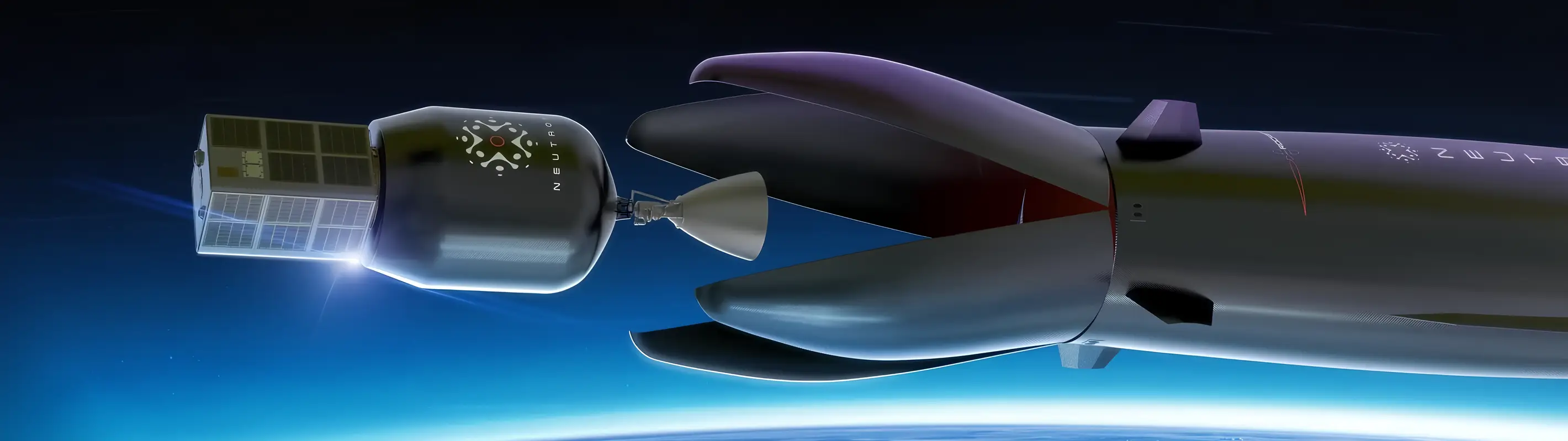
Rocket Lab has other constellation work in motion beyond Iridium as well. It’s a strong contender to build satellite buses for Equatys, a 2,800 satellite constellation backed by Space42 and Viasat that’s meant to give multiple mobile carriers shared access to the same orbital infrastructure rather than each building their own. The company also holds a prime contract to deliver 18 satellites for the Space Development Agency’s Tranche 2 Transport Layer Beta program, with deployment targeted for around the middle of next year, and its new Neutron rocket is still on track for qualification flights before this year ends. Put all of that together and Iridium looks less like an isolated $8 billion bet and more like the anchor piece in a strategy aimed at controlling manufacturing, launch, and network operations under one roof.