
How will Satellite and Terrestrial Networks Unite Under One Standard?
Jan 16, 2026
ST Engineering iDirect has announced a collaboration with Capgemini to develop a 5G Non-Terrestrial Network (NTN) satellite base station designed to integrate satellite and terrestrial networks. The partnership focuses on creating cloud-native technology that will accelerate the adoption of standards-based, software-defined 5G NTN solutions across the telecommunications industry. This collaboration addresses the growing need for seamless connectivity in areas where traditional terrestrial networks cannot reach. By combining their technical expertise, both companies aim to establish infrastructure that supports truly global communications without geographical constraints.
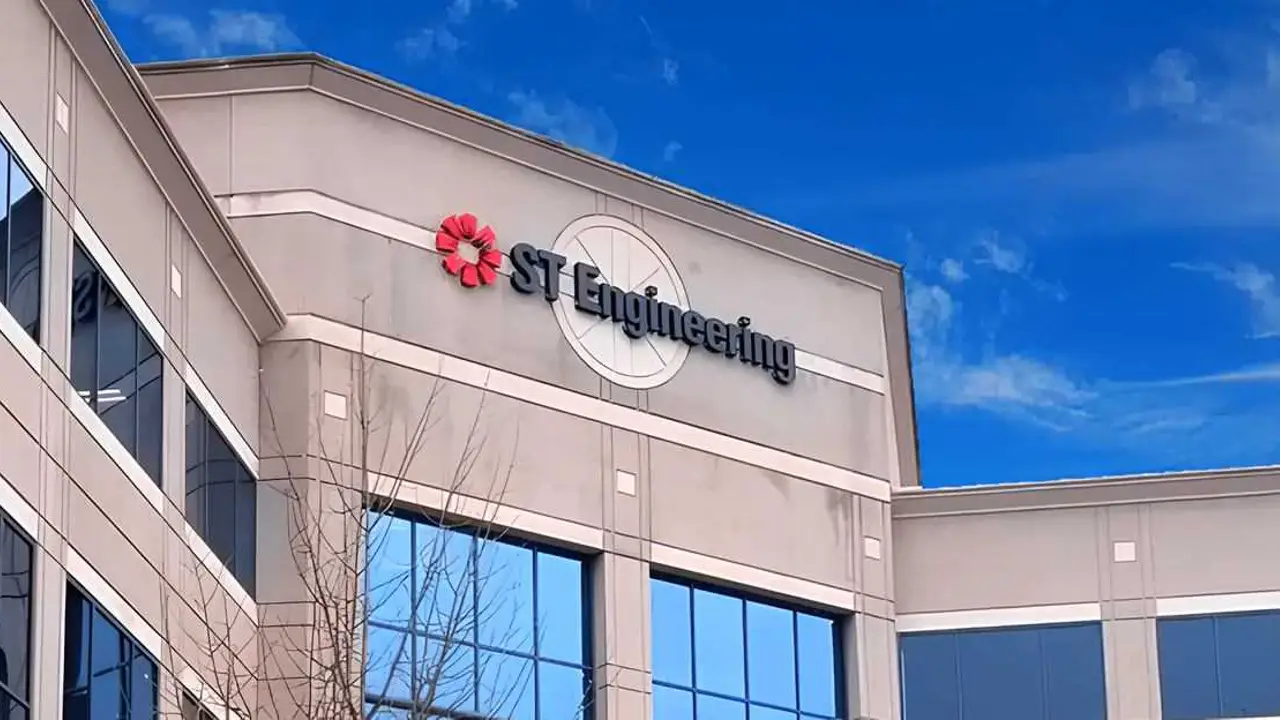 ST Engineering iDirect HQ. Credit: Google
The core of this initiative is the advanced combination of complementary technologies that the companies have to offer. ST Engineering iDirect’s Intuition ground system offers a cloud-native platform that is capable of evolving according to the needs of different networks on the fly. Capgemini also provides its gNodeB software stack which serves as the traffic controller between user devices and the larger network infrastructure. The result of this fusion is what the companies term a Radio Access Technology that has been specifically tailored to meet the specific demands of satellite communications such as signal latency and atmospheric interference.
The rationale behind this collaboration extends far beyond immediate technical achievements, according to company executives. Sridhar Kuppanna, who leads technology strategy at ST Engineering iDirect, articulated how this project represents a critical step in the company’s broader ambitions for next-generation networks. He described the initiative as fundamentally aligned with what the company calls its hybrid approach, which recognizes that the transition to fully standardized 5G and eventually 6G systems will not happen overnight. Instead, operators need solutions that allow them to leverage their current investments while simultaneously preparing for future requirements. Kuppanna stressed that this balancing act—maintaining compatibility with existing non-3GPP systems while building toward full 3GPP compliance—would prove essential for operators trying to navigate an increasingly complex technological landscape.
The technical specifications with which Capgemini comes to this partnership explain why this collaboration holds such great potential. Their gNodeB design supports both transparent and regenerative satellite modes, enabling network operators to flexibly approach how they use space-based assets to transmit data. Moreover, the system supports FR1 and FR2 frequency bands with millimeter wave capability that can support significantly higher data throughput. These are not just incremental improvements but the type of capacity enhancements that are required to accommodate bandwidth-intensive applications that are increasingly demanded by users. With these capabilities combined with ST Engineering iDirect’s ground infrastructure, the combination is more than the sum of its parts, a system that is able to scale on a global level without compromising the seamless handoffs between satellites and earth towers that users have come to expect in pure ground-based networks.
Nicolas Rousseau, the Chief Digital Engineering and Manufacturing Officer at Capgemini, explained that the partnership highlighted the commitment that his company has in terms of promoting innovation in both the terrestrial and non-terrestrial network environments. He described how through the combination of ST Engineering iDirect satellite experience and Capgemini 5G software leadership and broad global engineering scale, they were powering standards-based NTN solutions to the industry. Rousseau underlined that they were building the basis of genuinely ubiquitous connectivity that would make operators and businesses global.