
Fewer Satellites and Higher Financial Stakes for SES
May 23, 2026
Since the acquisition of Intelsat in July 2025, SES has become one of the world’s largest satellite operators with over 100 geostationary and medium Earth orbit satellites in orbit. But this larger scale has not led to aggressive expansion. Instead, the Luxembourg-based company has taken a decidedly conservative route. During its Q1 2026 earnings call and in its subsequent press release, SES indicated that it will be focused on disciplined capital allocation rather than aggressive growth in the near term. The message from leadership remained consistent, stating that all programs must be cost-justified or they will be eliminated.
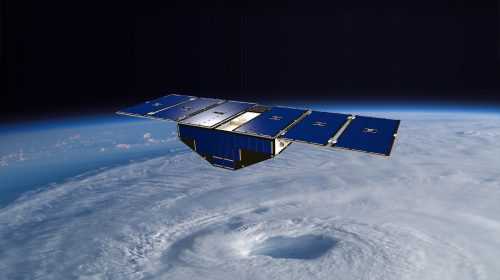
 Credit: DG DEFIS
The most tangible sign of this was the cancellation of two geostationary satellites, IS-41 and IS-44, which Intelsat had ordered from Thales Alenia Space in 2022 as part of an ambitious growth strategy after bankruptcy. The satellites were supposed to provide broadband services in Africa, Europe, the Middle East and Asia, and were originally scheduled to launch in 2027. This decision followed a comprehensive study of fleet overlap and redundancy following the merger, SES said in a statement, adding that the company has significant flexibility with four additional software-defined satellites and existing fleet capacity to keep customers served. The review also examined the potential for extending the useful life of the existing satellites through in-orbit servicing missions rather than constructing new satellites, CFO Lisa Pataki added. SES has defined five such life-extension missions to be undertaken between 2026 and 2029 with servicers from Northrop Grumman’s SpaceLogistics subsidiary, Starfish Space and Infinite Orbits.
This rationalisation mentality is not confined to the GEO fleet. In the same earnings call, CEO Adel Al-Saleh said that the Company would be eliminating certain legacy initiatives that had not achieved the desired financial returns, describing them as projects the company must eliminate to avoid carrying zombie programs on its books. At the same time, SES reaffirmed its capital expenditure forecast of 700 million euros through 2026, which now needs to be expanded to include initial investments in two major future projects, including the meoSphere next-generation MEO network to be in operation by 2030, and the first phase of the IRIS2 sovereign European satellite constellation. It is a testament to SES’s commitment to cost discipline at this stage of its development that it is holding that CapEx ceiling firm and funding both programs.
The choice of IRIS2 is likely the most critical one on SES’s agenda today. The program is the European Union’s flagship project to create a secure, multi-orbit satellite constellation that will ensure strategic autonomy in government communications. The contract for the concession was awarded in October 2024 to the SpaceRISE consortium, which consists of SES, Eutelsat and Hispasat, with the private partners to invest a total of up to 4.4 billion euros, of which SES will pay some 1.8 billion euros for the MEO shell under the agreement. The consortium has now made it to the first project milestone, dubbed Rendez-vous 1, but SES has said it requires a couple more weeks to finish its in-house evaluation of the financial and operational KPIs before taking any further steps. Al-Saleh was clear the company will not move forward until the technical objectives and timeline are aligned with the framework set in 2024, emphasizing that they will not face a budget burst scenario, which he described as a commitment to the shareholders. The final go/no-go decision will be made by mid-2026, and initial government services from the full IRIS2 system are expected to start around 2030.
Taken together, these decisions suggest a company readjusting itself after a major transformation. The Intelsat purchase was large but also complex, bringing overlaps and legacy obligations that were no longer compatible with the new corporate environment. The company is making a bold statement as to how it will compete in the future by eliminating redundant satellites, extending the useful lives of assets it already has, limiting capital spending, and carefully examining even a high-profile EU program. Growth is still on the agenda, albeit in a selective way, as the 50.7% year-on-year jump in government revenues in Q1 2026 shows, but it will be pursued on terms the company can afford. That level of discipline could be the most important asset that SES has in an industry where multi-billion euro deals can make or break an operator for a decade.