
348 Satellites, Faster Timeline, Bigger EU Ambitions
Aug 23, 2026
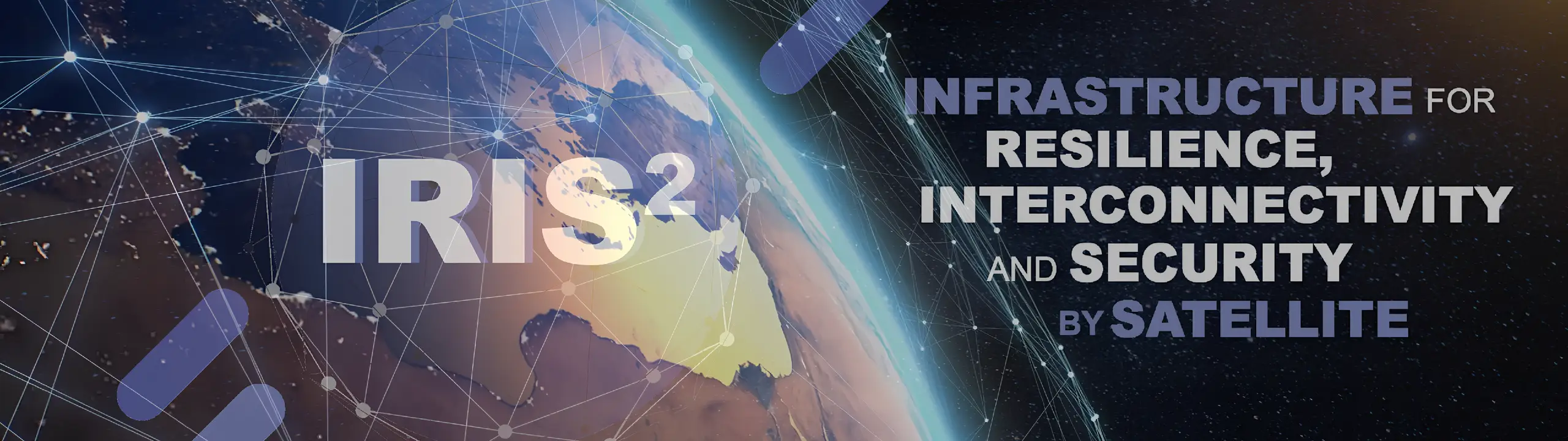
SES, Eutelsat, and Hispasat have concluded Rendezvous 1 (RDV1) negotiations with the European Commission under the SpaceRISE consortium, a milestone that pushes Europe’s IRIS² satellite constellation from planning into full-scale deployment. The talks began back in January and wrapped up on August 6, with the European Commission and SpaceRISE signing an implementation agreement the following day.
 Credit: ESA
The constellation itself just got considerably larger. IRIS² now covers 348 satellites total, split between 330 in low Earth orbit and 18 in medium Earth orbit, up from the roughly 282 originally outlined when the concession contract was signed back in December 2024. The extra 66 satellites form a dedicated high-LEO layer meant specifically to strengthen defense, security, and emergency service capabilities, and the European Commission says that addition alone boosts secure governmental capacity by 60 percent within the EU and 54 percent globally. Alongside that expansion, the timeline actually moved up rather than slipping, with first launches now targeted for 2029 instead of 2030.
None of that growth came free. The funding is provided by a mix of EU budget resources dedicated for the period of 2028–2034, and by additional investments from member states pursuing their own specific needs. Poland has already pledged €656 million and Hungary €500 million, while Spain has pledged between €1.6 and €2 billion, with other national pledges yet to be finalized. SES has its own capital investment in the MEO segment, capped at €1.35 billion and covering the design of the payloads and the assembly and testing of the satellites at its facilities in Luxembourg, and the company does not anticipate that figure increasing further. Once satellites are in service, approximately 90 percent of the MEO capacity SES builds will be commercially available to sell.
The build-out involves a genuine Team Europe effort. Numerous small and medium-sized suppliers are involved in the program throughout the European industrial base, and the program is specifically designed to provide opportunities for start-ups and mid-sized companies. ESA’s job is to oversee development, qualification, and in-orbit validation, also taking the program’s vision and turning it into something that can be manufactured and delivered on time. Once running, IRIS² gives government agencies, militaries, and emergency responders across the EU, along with Norway and Iceland, a way to stay connected during emergencies that doesn’t run through infrastructure controlled outside Europe.
European Commissioner Andrius Kubilius described the agreement as a decisive step for the continent’s security and digital sovereignty, framing the accelerated timeline as proof Europe can deliver resilient, autonomous connectivity ahead of schedule. For ESA Director General Josef Aschbacher, the completed milestone shows something more fundamental, that Europe can build a secure capability enabling independent action on its own terms. What comes next is the harder part, actually manufacturing hundreds of satellites, securing launch services, and building out secure ground infrastructure fast enough to hit 2029, but clearing this particular negotiating hurdle with a bigger, faster program rather than a scaled-back one is the kind of outcome that large multinational space projects don’t always manage.